
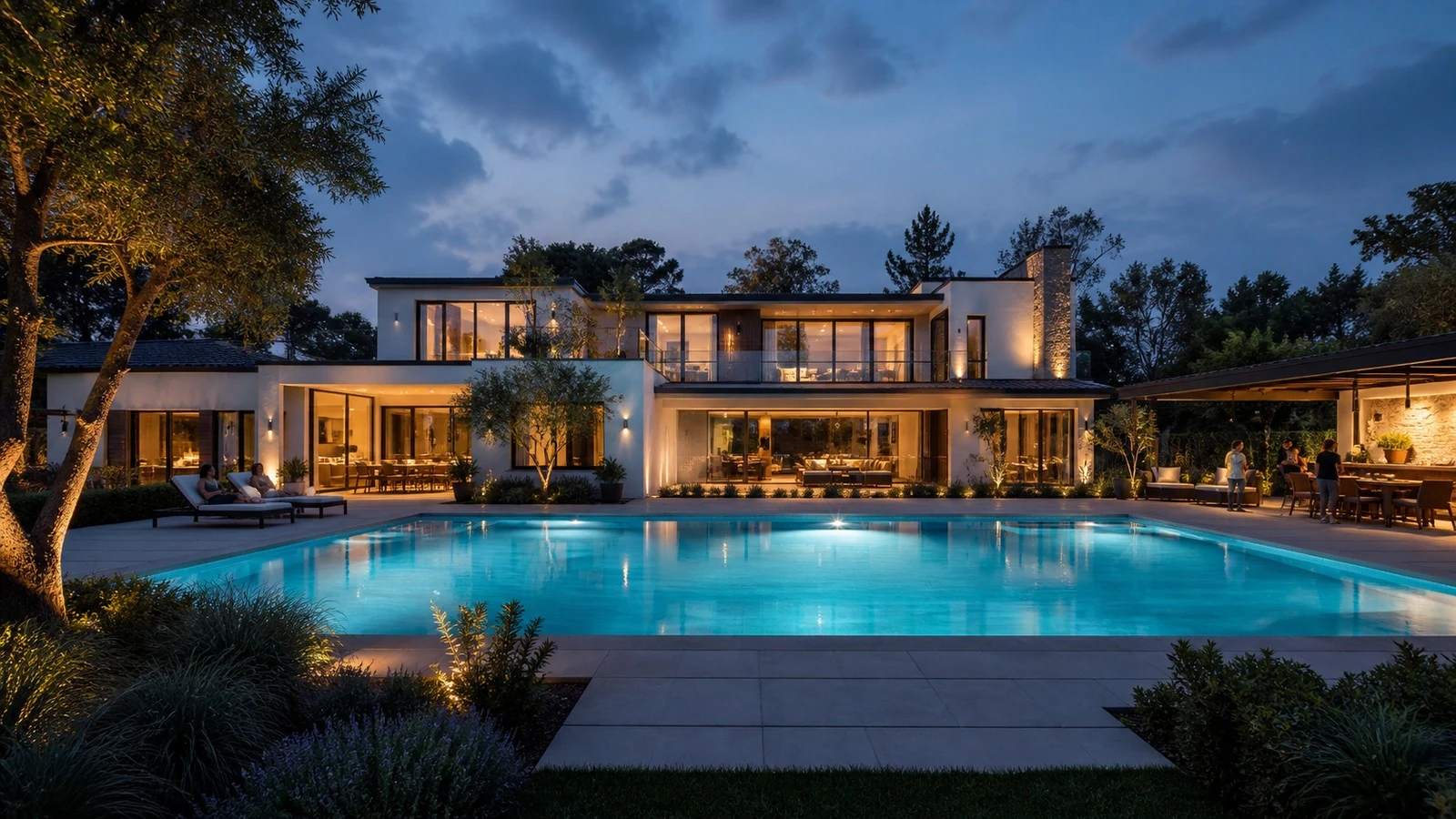
The best pool lighting reveals depth, movement and architecture while preserving the water’s visual calm. A MAZACURE standard.
Pool lighting begins as a hierarchy decision, then fixes the fixture strategy. Water, steps, deck, planting and interior rooms must share the scene after sunset. AURA begins with the important viewpoints and activities, then composes brightness, direction, warmth and reflection across the complete environment.
1. Build layers, not brightness
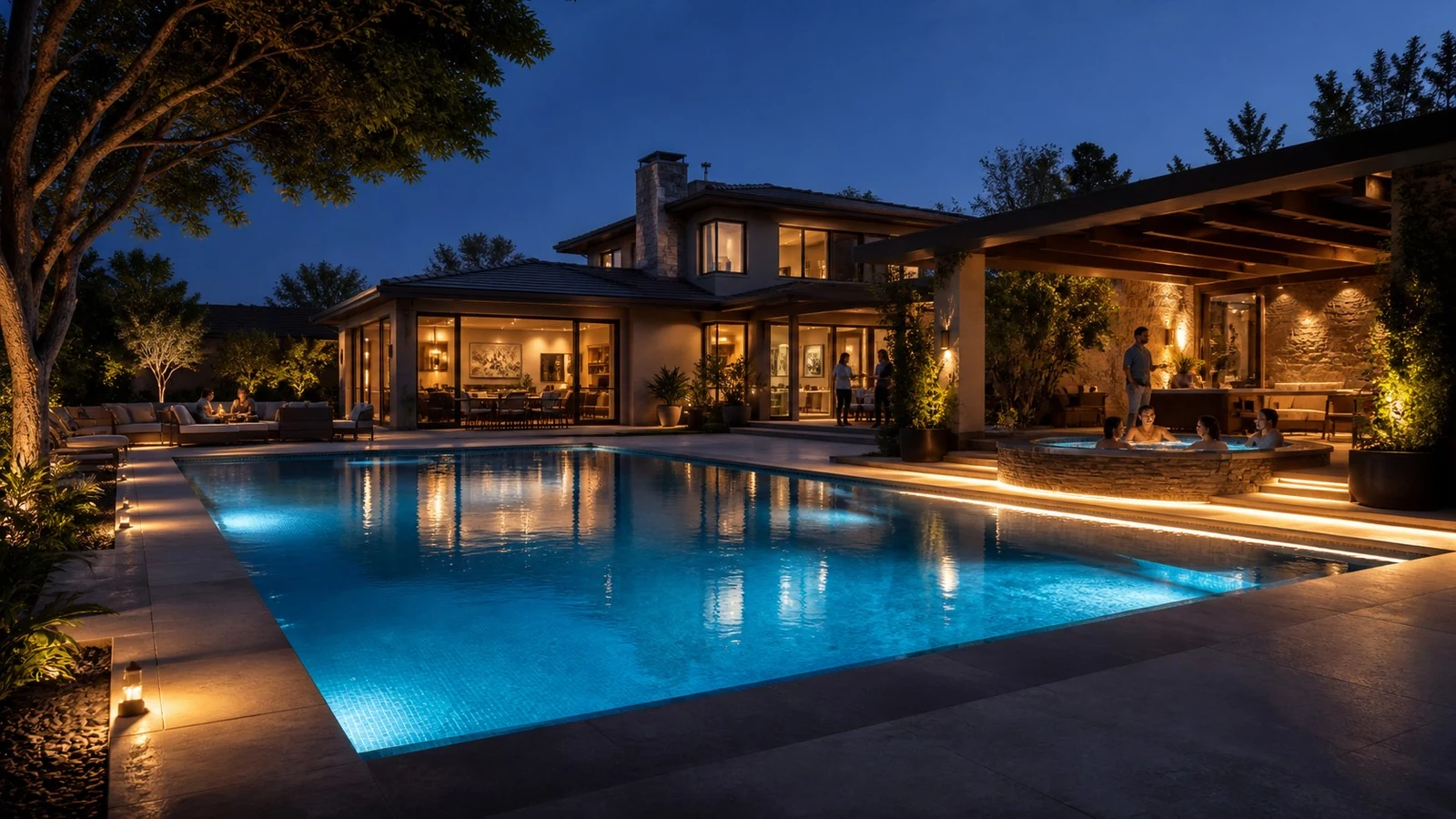
A convincing night scene uses several restrained layers: underwater illumination, warm terrace light, selected planting accents and a softly visible interior. No single layer must dominate. The pool remains the anchor because the surrounding architecture gives its light context and scale.
DESIGN READING | Balanced lighting layers keep the complete pool at the centre of the scene.
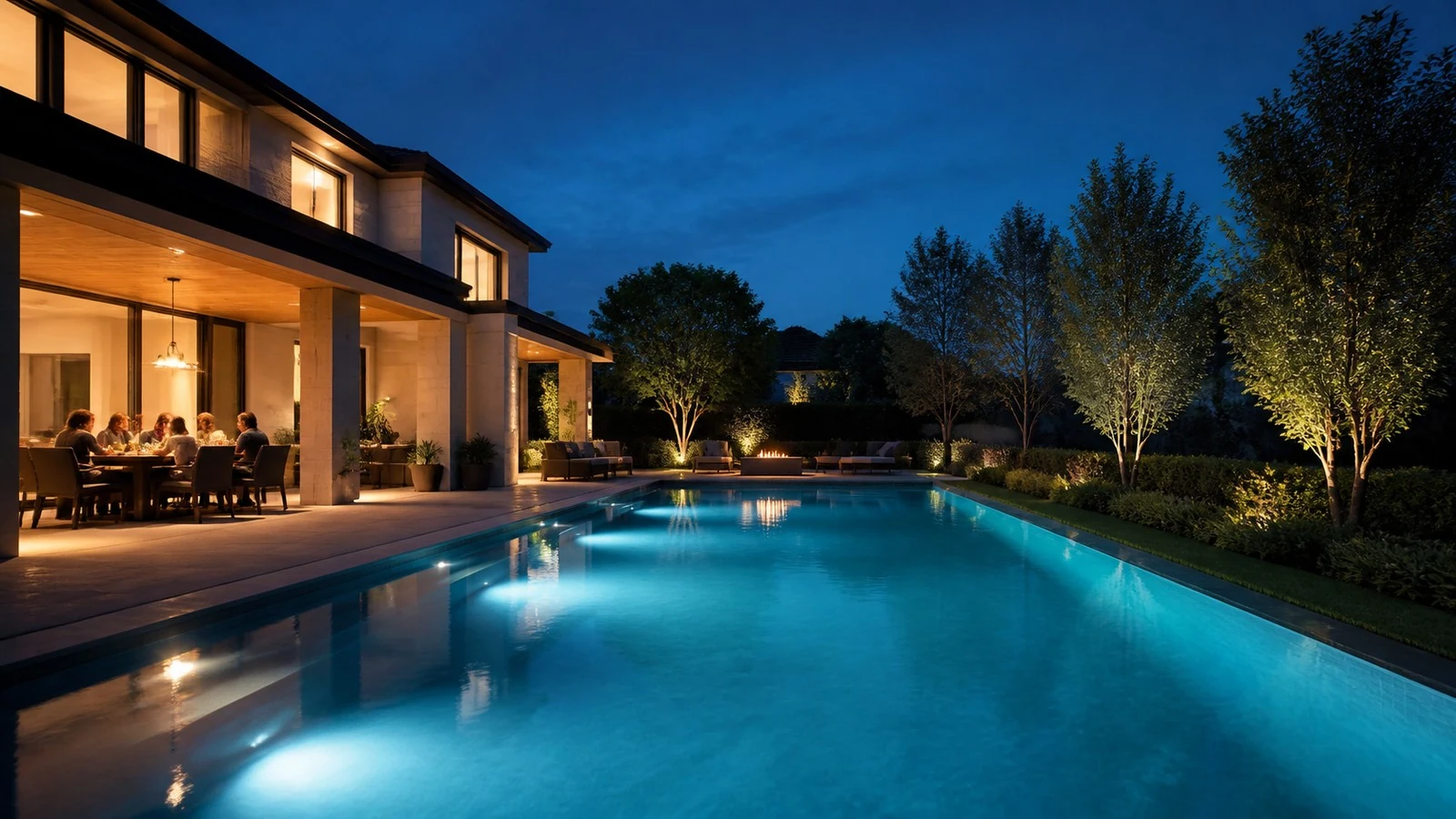
2. Design from the primary viewpoint
Underwater lights must be considered from the house and principal outdoor seating areas. Thoughtful direction reduces direct glare and allows the water to glow more evenly. The visual question is simple: what must a person see across the pool, and what must remain quiet?
DESIGN READING | A long view demonstrates even illumination without a harsh visible source.
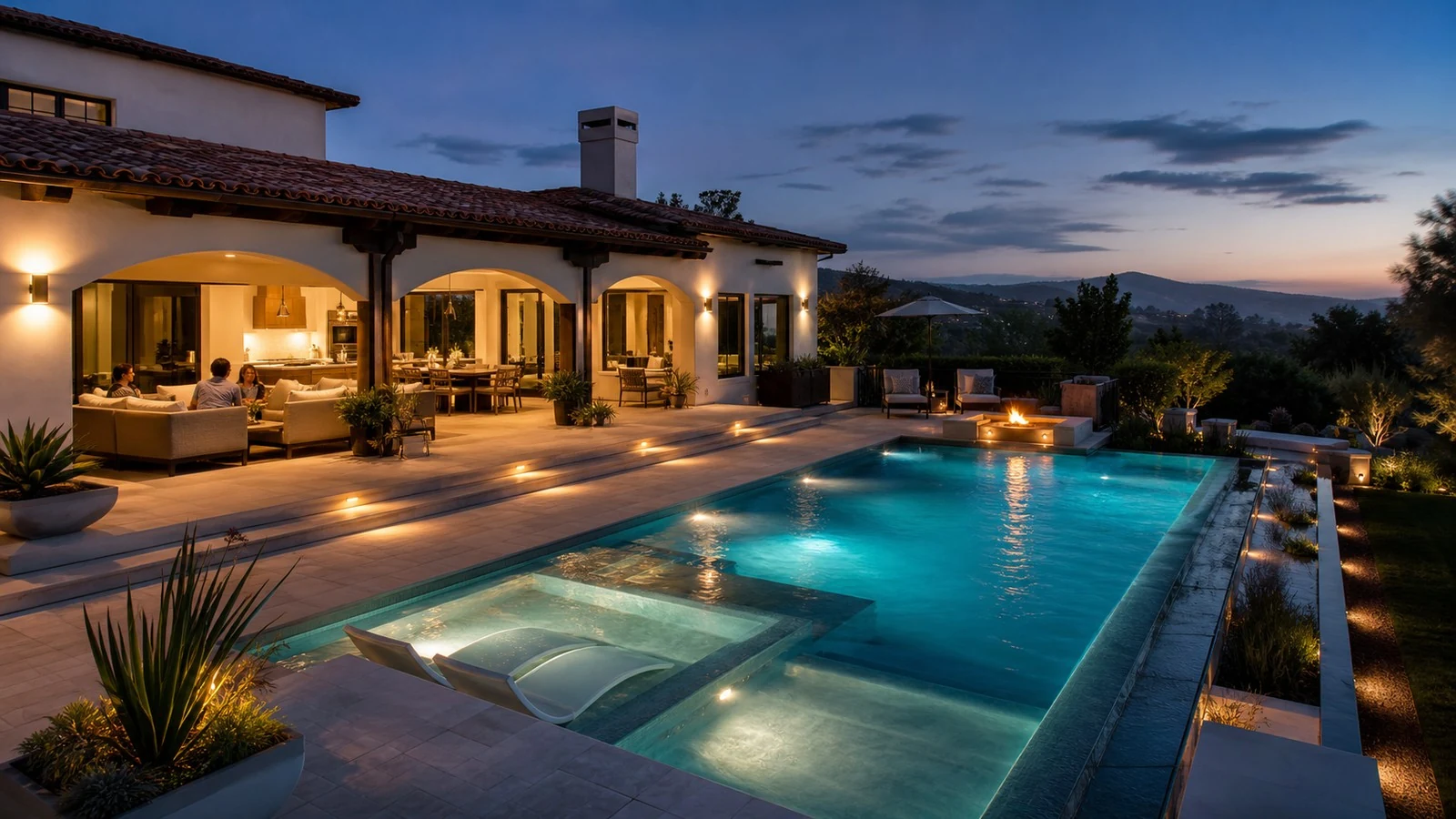
3. Reveal changes in level
Steps, benches and shallow shelves need enough light to read after dark, yet each receives its defined intensity. A controlled shift in brightness can explain depth and help users move confidently while preserving the deeper area's visual calm.
DESIGN READING | Different activity depths remain legible within one harmonious pool.
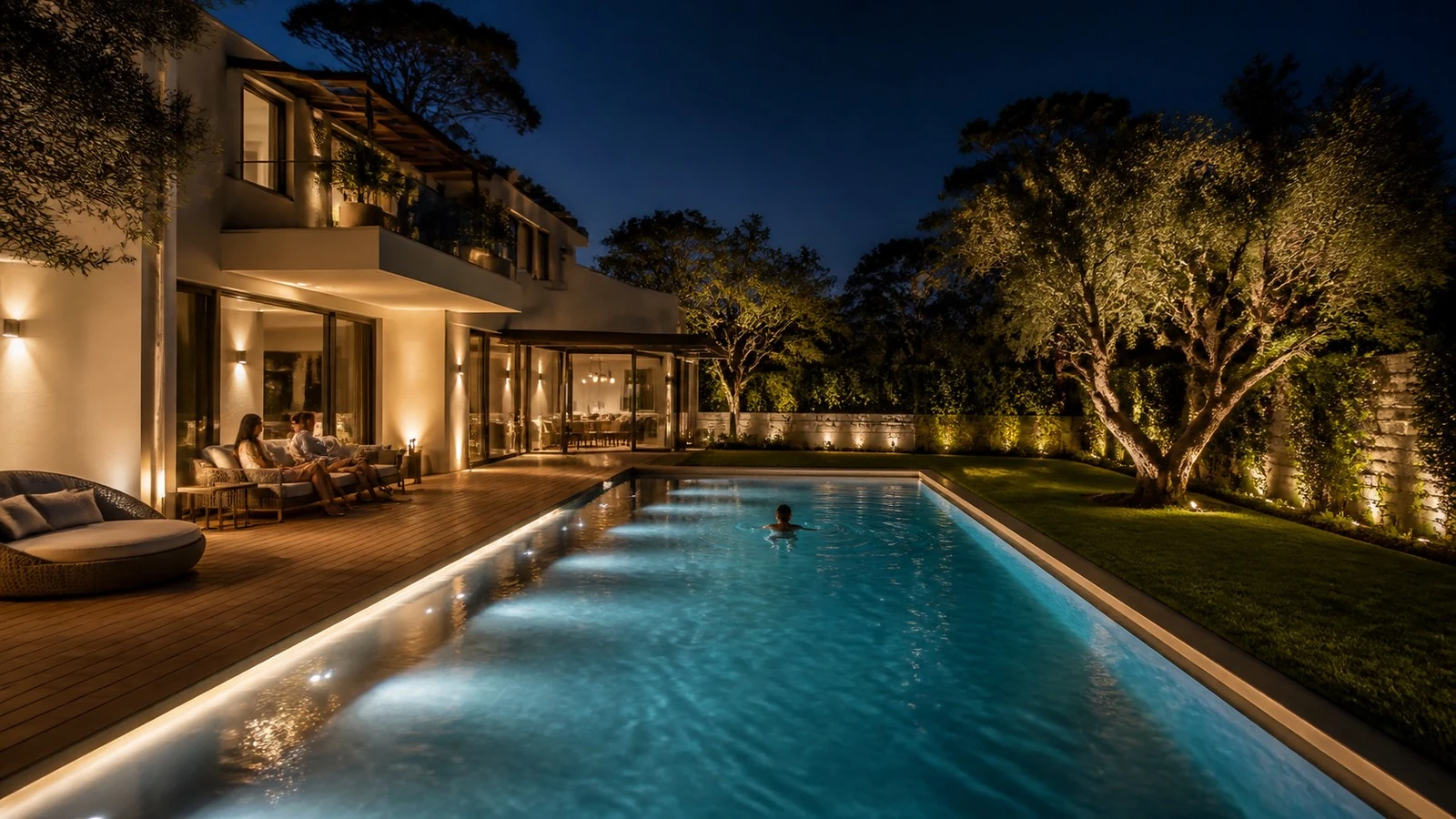
4. Let the edge remain elegant
Perimeter and landscape lighting must reinforce the pool geometry without outlining every surface. A few deliberate lines and softly illuminated planes are more powerful than continuous brightness. Darkness is a design material: it gives reflection, water movement and architecture room to breathe.
DESIGN READING | Restrained edge light supports geometry while the garden stays atmospheric.

5. Plan for reflection
A calm water surface can mirror the house, sky and planting. Excess underwater brightness can erase that second image. A composition can deliberately preserve a darker reflective zone while illuminating active water, producing both function and visual depth in the same pool.
DESIGN READING | Reflection and active illumination are balanced across the complete water body.
6. Coordinate colour temperature
Warm architectural light and clean pool light can coexist when their roles are clear. Use one coordinated colour language across the space. The goal is a sophisticated evening atmosphere in which faces, materials, water and landscape all appear natural.
DESIGN READING | Warm social light and neutral water light create a coherent evening palette.
Design Check
- Review fixture direction from the house, terrace and water.
- Preserve darker zones for reflection and visual depth.
- Give steps and ledges clear but restrained illumination.
- Coordinate pool, landscape and interior colour temperatures.
Reference Notes
Pentair IntelliBrite Architectural Serieshttps://www.pentair.com/en-us/pool-spa/products/lighting/intellibrite-architectural-series-pool-spa-lighting.html