
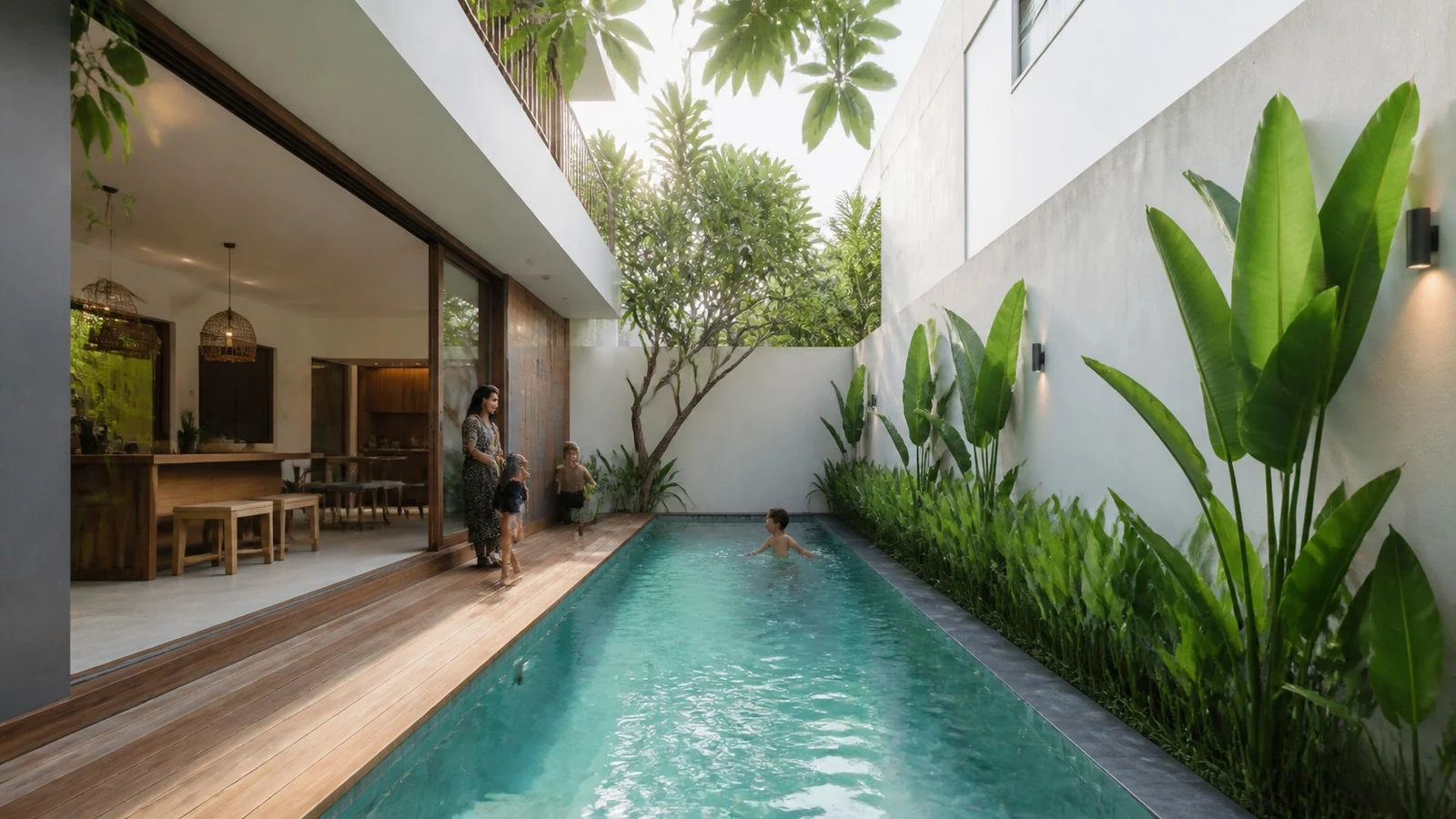
A smaller pool can feel more architectural when every line contributes to space, movement and view. The MAZACURE standard for beautiful, usable pool architecture.
Compact sites require a clearer hierarchy than scaled-down large pools. The best geometry protects circulation, extends important sightlines, supports the owner's preferred activity and leaves enough landscape to make the water feel generous. AURA designs the pool and the remaining space as one composition.
1. Use the longest useful axis
A narrow pool aligned with the primary interior view can make both house and garden feel deeper. The line must serve more than appearance: it can become a short lap route, a reflection axis and an organising edge for planting or circulation.
DESIGN READING | A long, slim pool extends the view through a compact courtyard.

2. Let geometry answer the site
An L-shape or offset can be appropriate when it absorbs an awkward corner and separates social water from a swim run. Custom geometry succeeds when it solves real spatial conditions; complexity without purpose only makes a small site feel busier.
DESIGN READING | An L-shaped pool turns a difficult corner into two useful water zones.
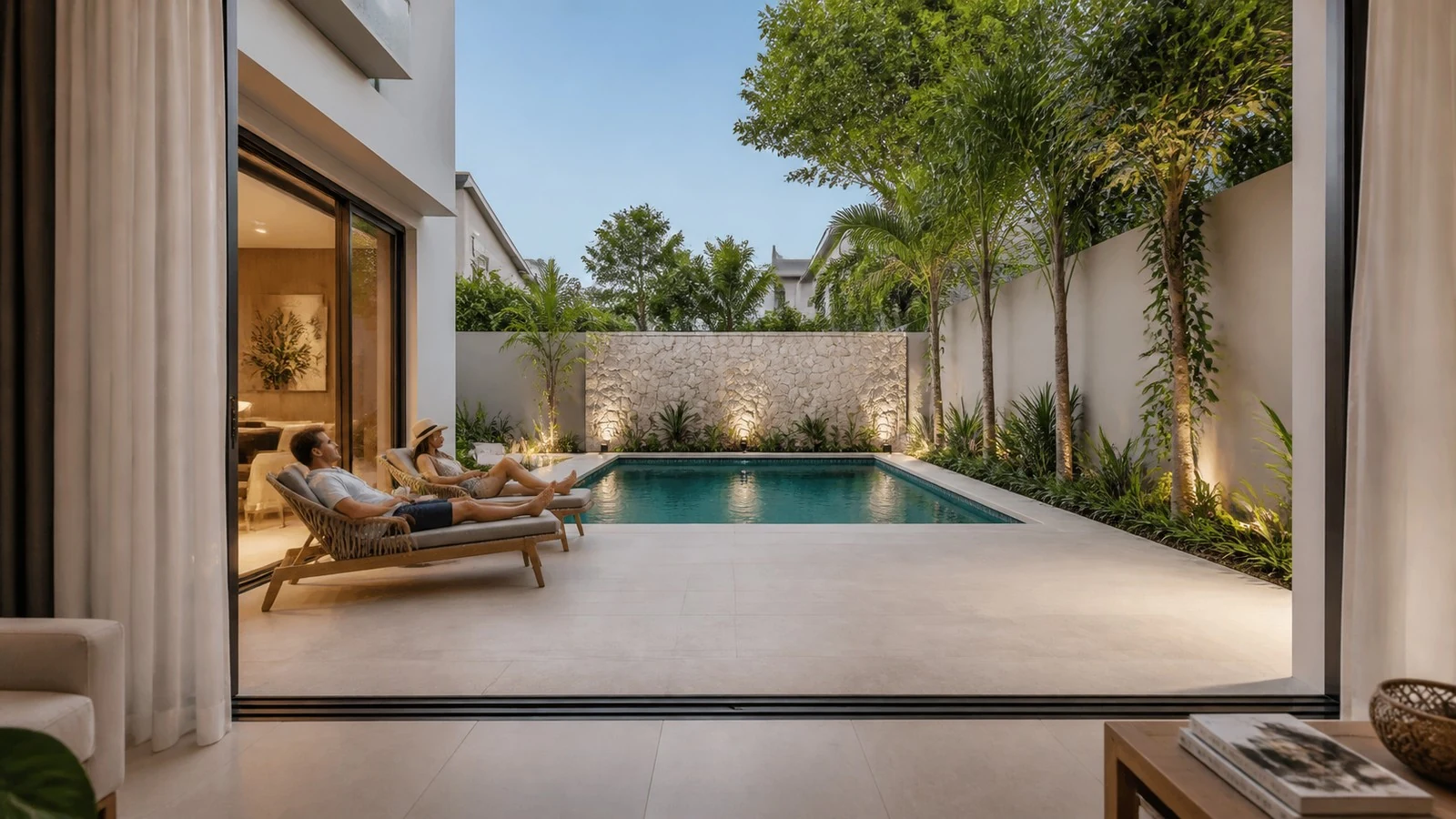
3. Place water to preserve terrace
Moving a plunge pool toward a boundary can release a larger, more flexible terrace near the house. This gives the pool greater architectural presence, because the foreground becomes a generous viewing and gathering space rather than a narrow leftover strip.
DESIGN READING | Boundary placement preserves a useful terrace and lengthens perspective.

4. Protect one continuous route
Doors, dining, garden and pool must connect without forcing people through furniture or around narrow corners. A single clear circulation path can make a compact plan feel calm. The pool shape must reinforce that route instead of creating obstacles beside it.
DESIGN READING | A continuous path links indoor and outdoor activities around the water.
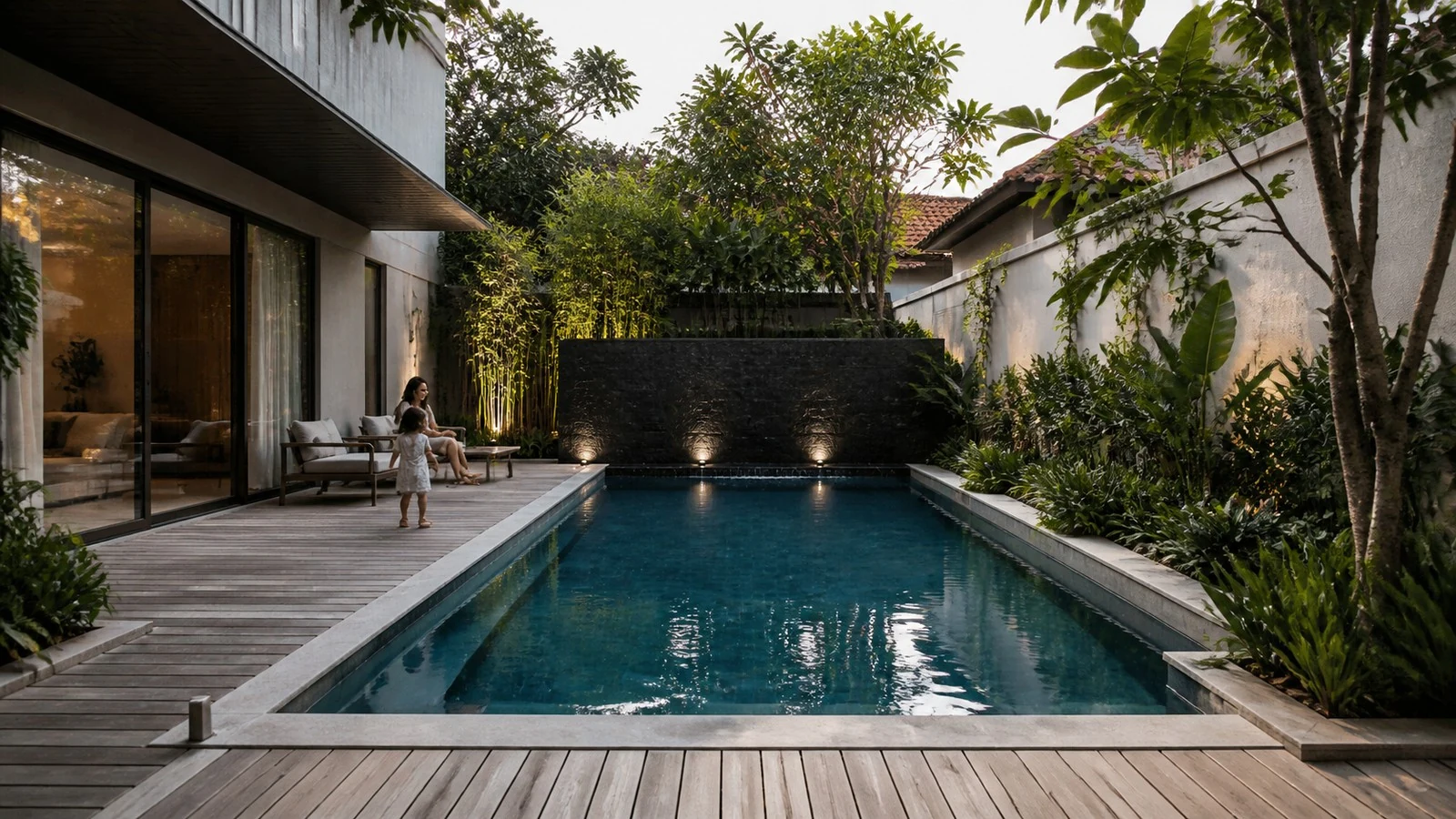
5. Borrow depth from the boundary
A dark wall, reflective surface or layered planting at the far end can visually extend the water beyond its dimensions. The technique works when the boundary belongs to the same composition and remains restrained enough that the pool is still the main character.
DESIGN READING | A reflective end condition visually extends the compact water body.

6. Use restraint to create generosity
Fewer materials, longer horizontal lines and controlled lighting help a small pool feel deliberate. Every added feature consumes visual space, so select only those that strengthen sound, reflection, movement or use. Clarity is the luxury that compact projects can deliver exceptionally well.
DESIGN READING | Long lines and restrained lighting give a small pool architectural presence.
Design Check
- Identify the most valuable view and longest functional axis.
- Reserve one uninterrupted circulation route.
- Protect enough terrace for the intended social use.
- Limit materials and features to those that strengthen the main idea.
Reference Notes
Houzz - Ideas for Petite Poolshttps://www.houzz.com/magazine/8-ideas-for-petite-pools-stsetivw-vs~27540631