
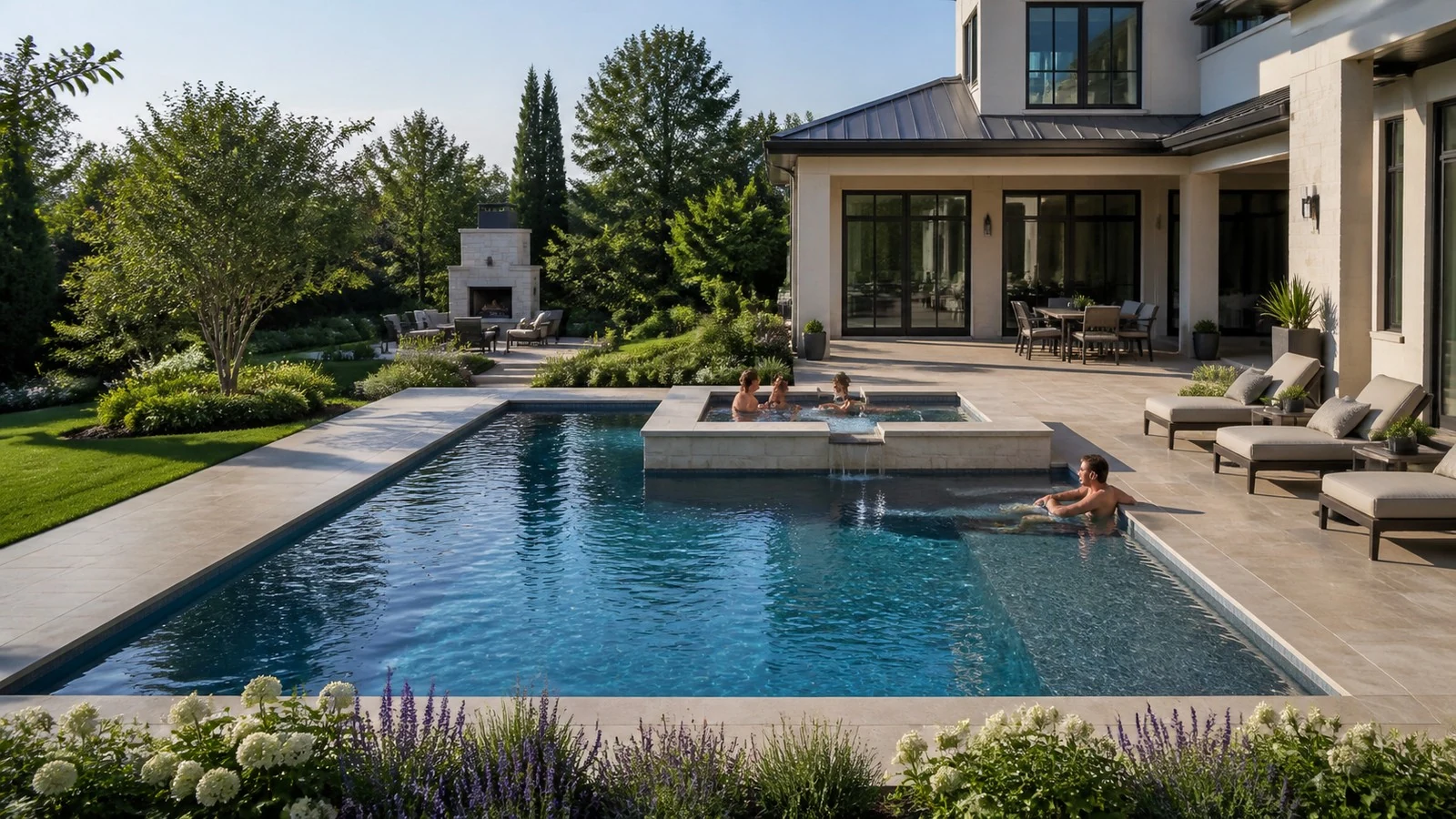
A spa must belong to the architecture of the pool, even when its mood and use are distinct. The MAZACURE standard for beautiful, usable pool architecture.
The relationship between pool and spa can be quiet, sculptural, social or dramatic. The design challenge is to give the spa intimacy without allowing it to become an unrelated object. AURA evaluates its level, geometry, outlook, edge condition, material language and connection to the places where people gather.
1. Align the spa with the architecture
A raised spa becomes convincing when its edges follow the same structural grid as the pool and villa. A controlled spill can make the connection visible, but the stronger idea is alignment: matching axes, consistent coping and a deliberate height that contributes to the overall composition.
DESIGN READING | A raised spa is integrated through alignment before the spillway adds movement.

2. Use a shared water plane for calm
A flush spa can sit within the pool as a quieter room in the same body of water. Subtle material or seating changes can identify it without fragmenting the view. This approach is especially effective where uninterrupted reflection and visual simplicity are central to the design.
DESIGN READING | A flush spa is differentiated gently while preserving the continuous water plane.

3. Separate physically, connect visually
A detached spa can better suit privacy, maintenance access or year-round use. It can still belong to the pool through repeated stone, matching edge profiles and a shared landscape axis. Proximity matters: the journey between the two must feel purposeful and comfortable.
DESIGN READING | Matching materials and geometry connect two distinct water experiences.
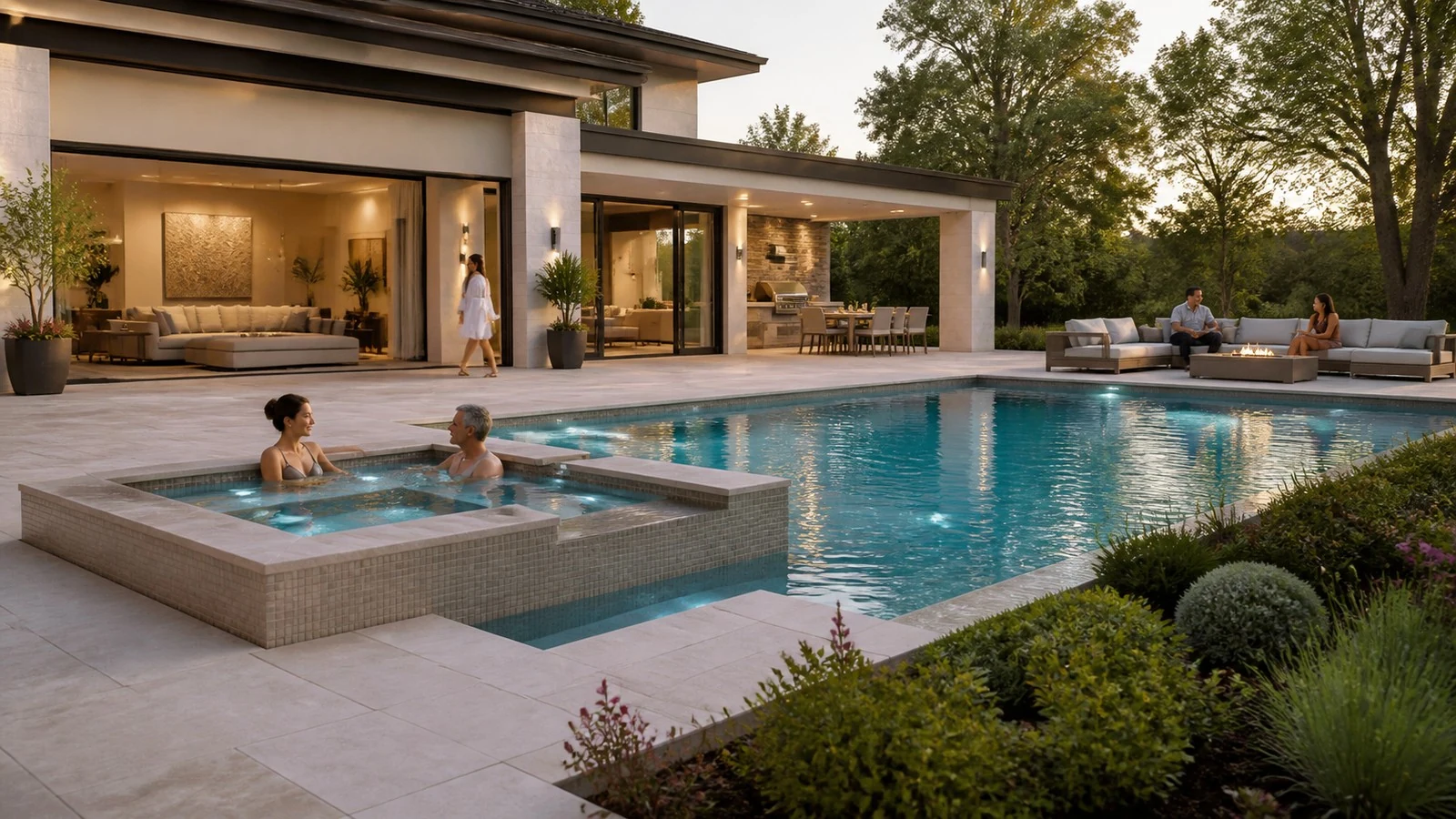
4. Make the spa a social hinge
Positioning the spa between indoor living, the outdoor lounge and the pool allows it to mediate between activities. People in the spa remain part of the gathering, while swimmers retain open water. The location must support conversation without turning the spa into a circulation obstacle.
DESIGN READING | The spa connects interior, terrace and pool as one social sequence.
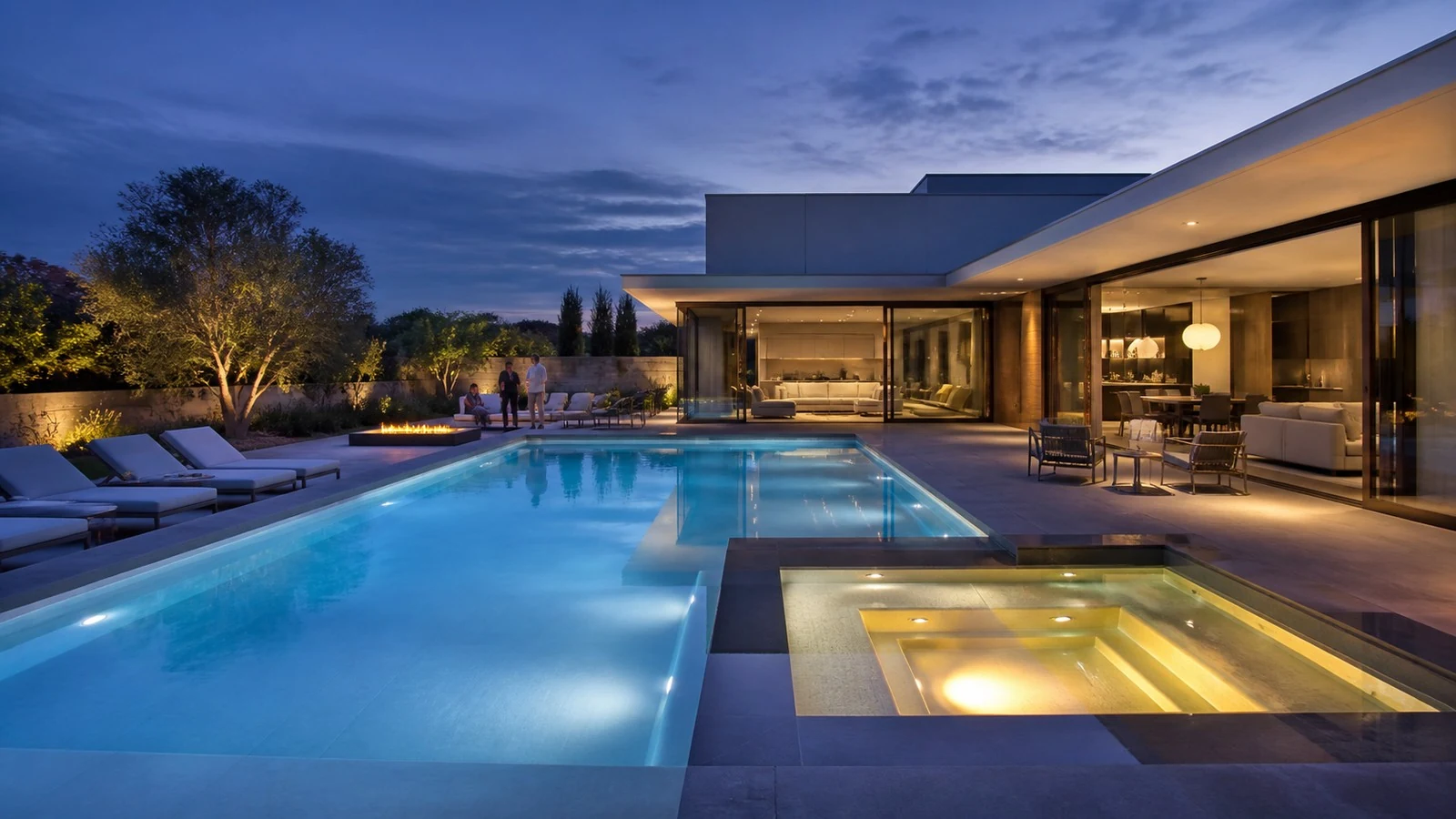
5. Create a different nighttime mood
The spa usually benefits from a warmer, more intimate lighting character than the open pool. The contrast must be subtle: enough to signal enclosure and relaxation, but controlled so both water bodies still belong to the same nighttime composition.
DESIGN READING | A warmer spa atmosphere sits comfortably within the cooler pool scene.
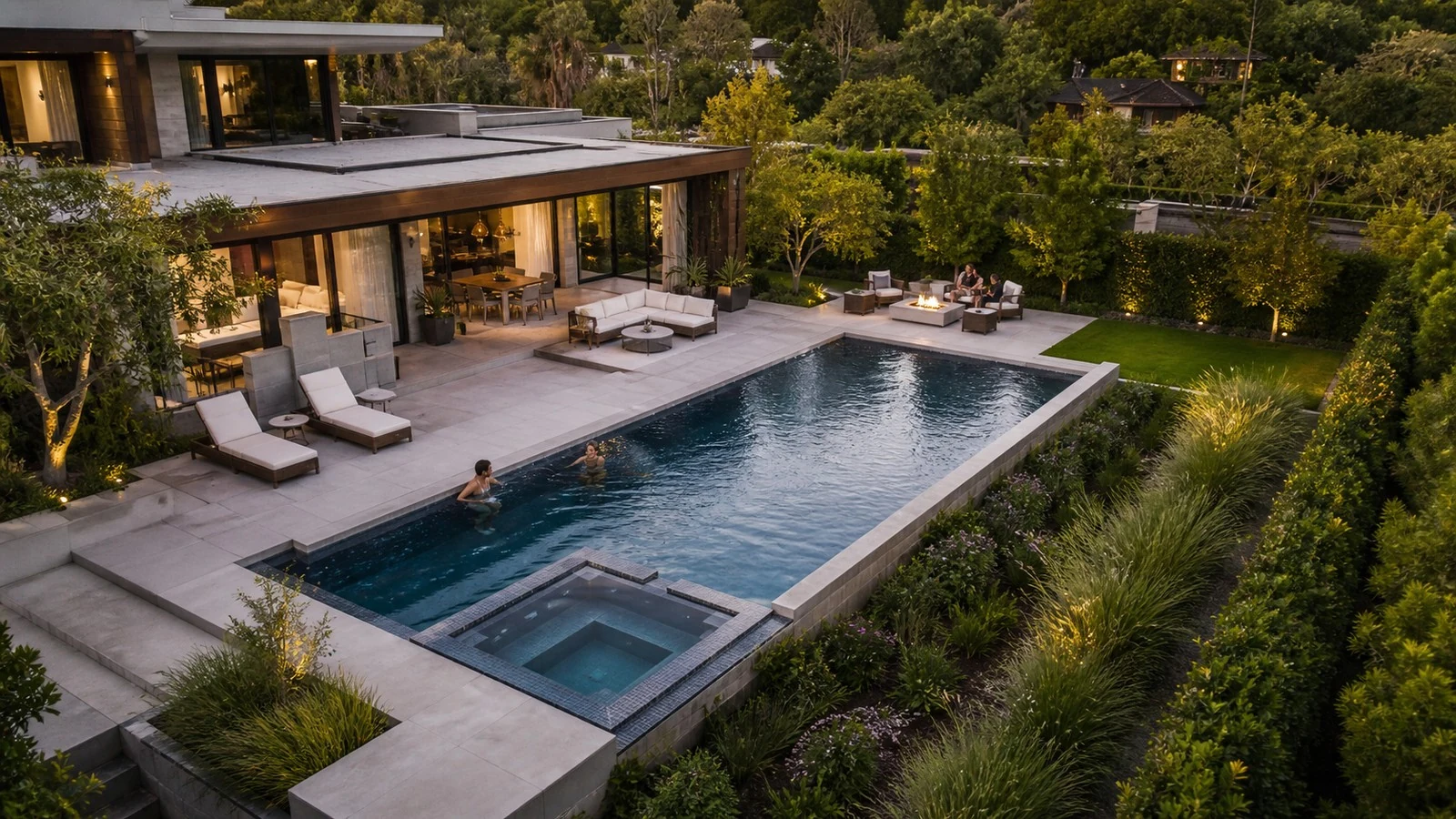
6. Balance outlook and privacy
Spa users stay in one place longer than swimmers, so their view and exposure deserve special attention. Orient seating toward the garden, horizon or architecture, then use planting and walls to screen unwanted sightlines. Privacy must be achieved without enclosing the entire pool environment.
DESIGN READING | Layered planting protects the spa while preserving its best outward view.
Design Check
- Align spa edges with the pool or building grid.
- Decide whether the connection must be visual, physical or both.
- Test conversation distances to terraces and indoor rooms.
- Review seated sightlines, privacy and night lighting together.
Reference Notes
PHTA Residential Inground Pool Standardhttps://www.phta.org/pub/?id=69c7ed55-f0d0-e8ca-857e-31bfdfe004ee