
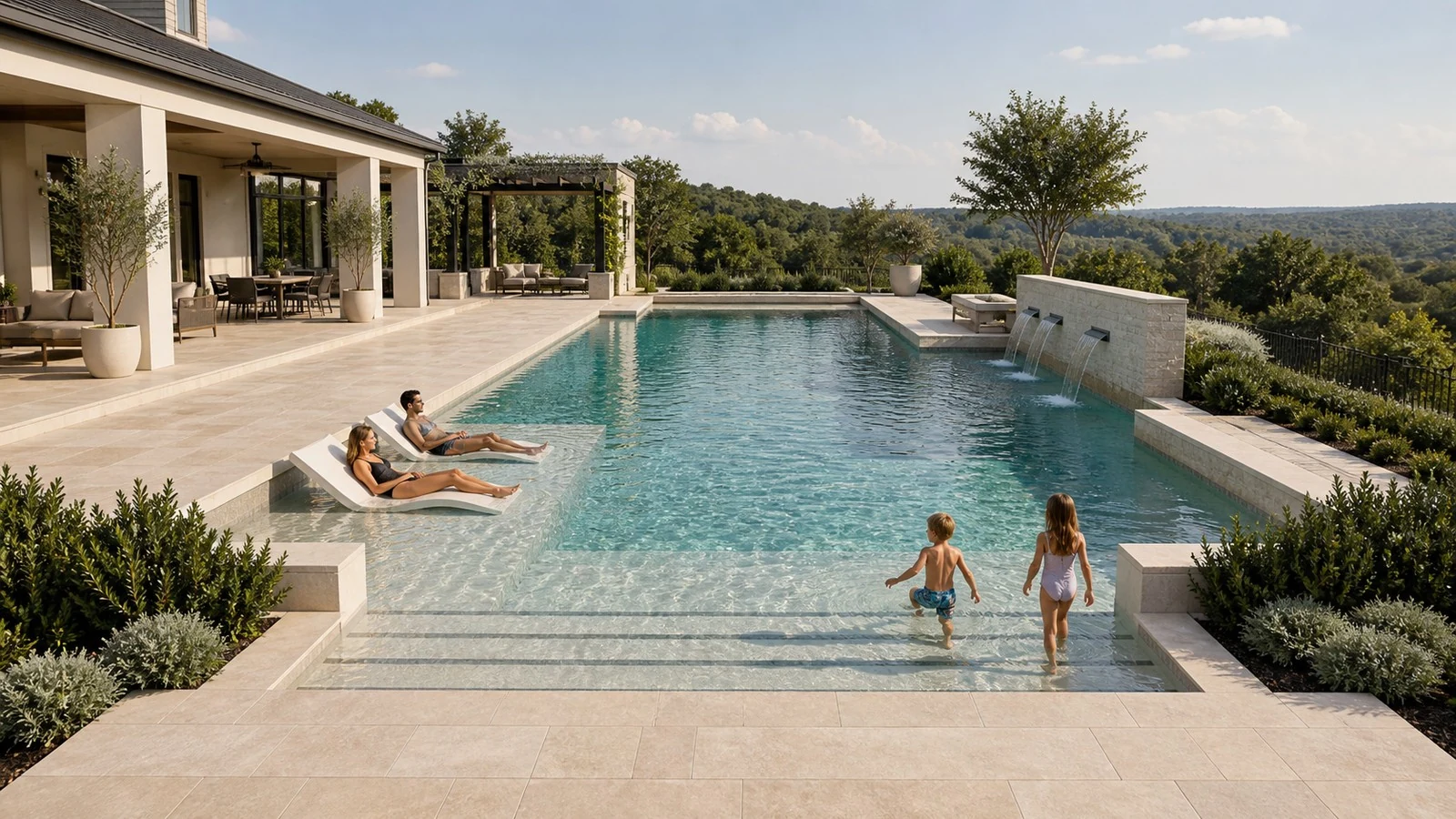
The first contact with water must feel intuitive, generous and inseparable from the pool's architecture. A MAZACURE standard.
A pool entry is not simply a way to reach the water. It establishes pace, reveals depth, supports different generations and decides whether swimming and social activity can coexist. AURA approaches shelves, steps and benches as one continuous spatial sequence: from terrace, to shallow water, to the open swimming volume.
1. Begin with the arrival
The strongest entry reads from the terrace before anyone reaches the edge. A broad shallow ledge can extend the social life of the deck into the pool, while a clear route beyond it preserves access to deeper water. Its proportions must respond to furniture, circulation and the number of people likely to gather there.
DESIGN READING | A generous shelf creates a calm threshold while the full pool remains visually dominant.
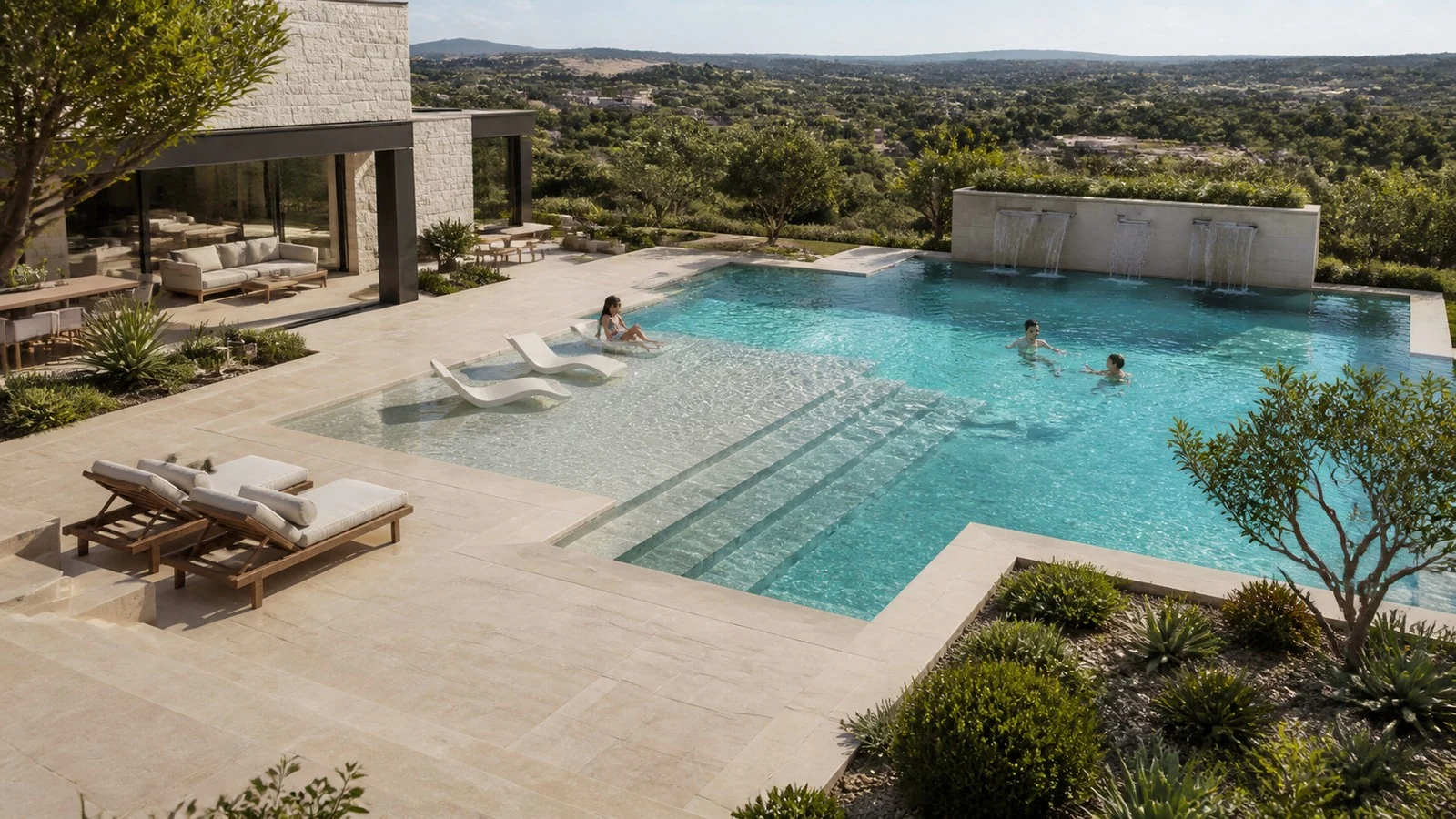
2. Make depth changes legible
Good steps communicate their sequence through width, alignment, material contrast and light. When every level belongs to the same geometric language, entering feels natural rather than cautious. The objective is not visual decoration; it is a readable transition that remains elegant from the house, garden and water.
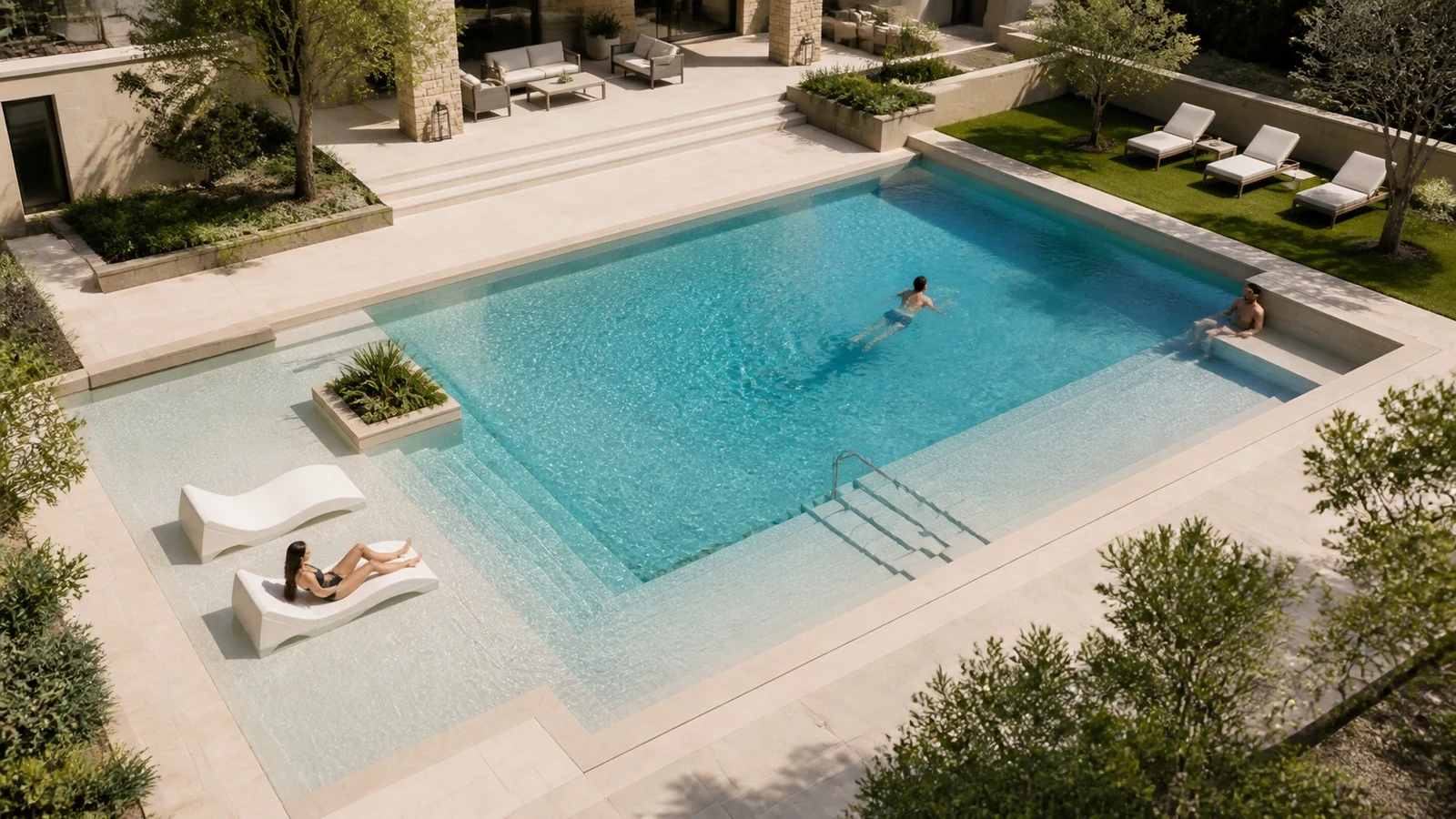
DESIGN READING | An elevated view reveals the complete progression from dry terrace to swimming depth.
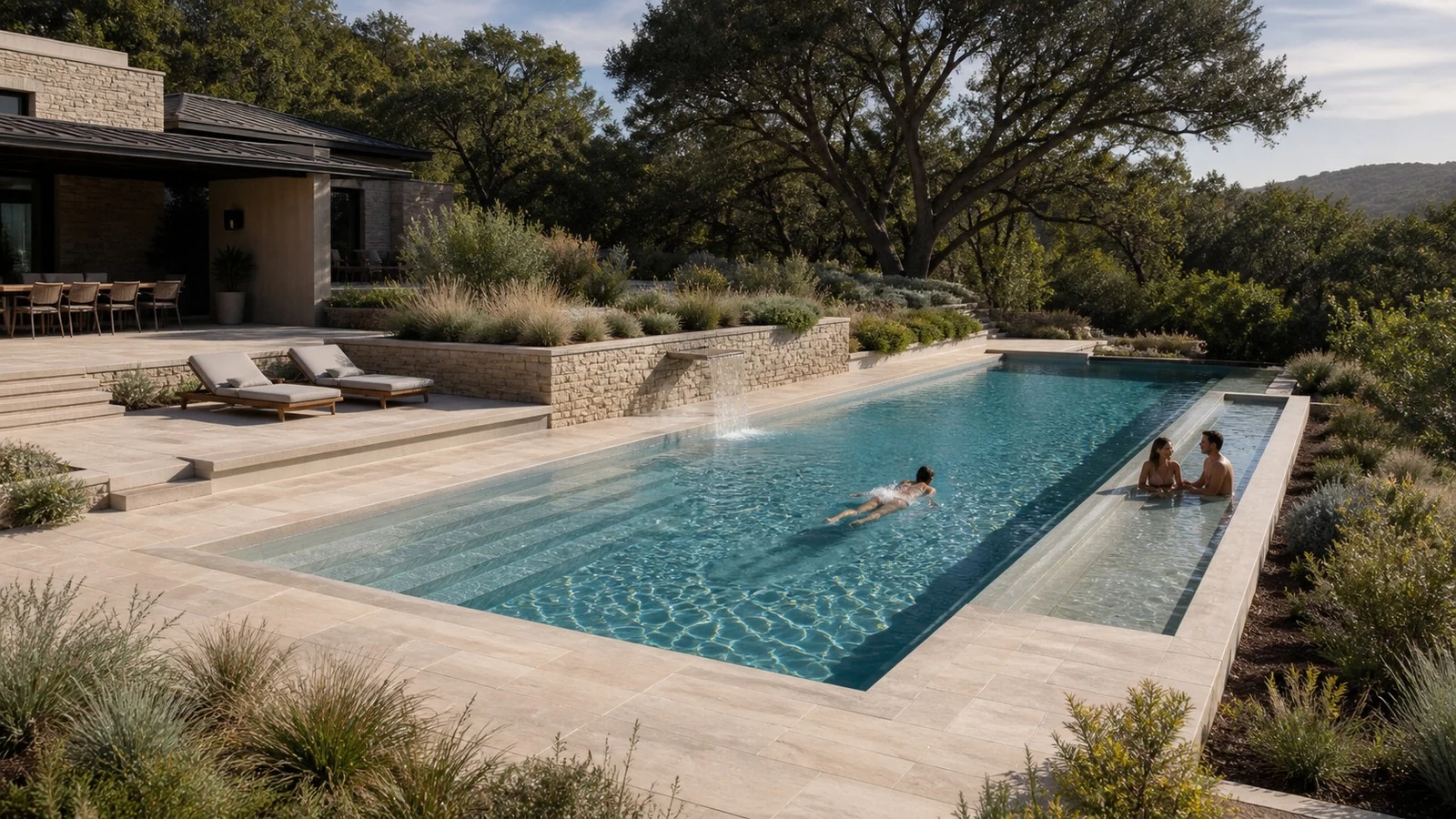
3. Protect the swimming line
A bench can encourage conversation without interrupting a lap path. Placing social seating along a side wall or at the short end keeps the central water volume open. This simple move allows one person to swim while others rest, supervise or talk without competing for the same space.
DESIGN READING | The social edge and active swimming axis operate together without collision.

4. Place shallow play beside activity
In family pools, a shallow platform works best when it remains connected to the principal social terrace and within comfortable sightlines. Positioning it beside the main swimming direction, rather than across it, helps adults supervise naturally and keeps the pool adaptable as children grow.
DESIGN READING | A shallow family zone remains visible from both terrace and pool.
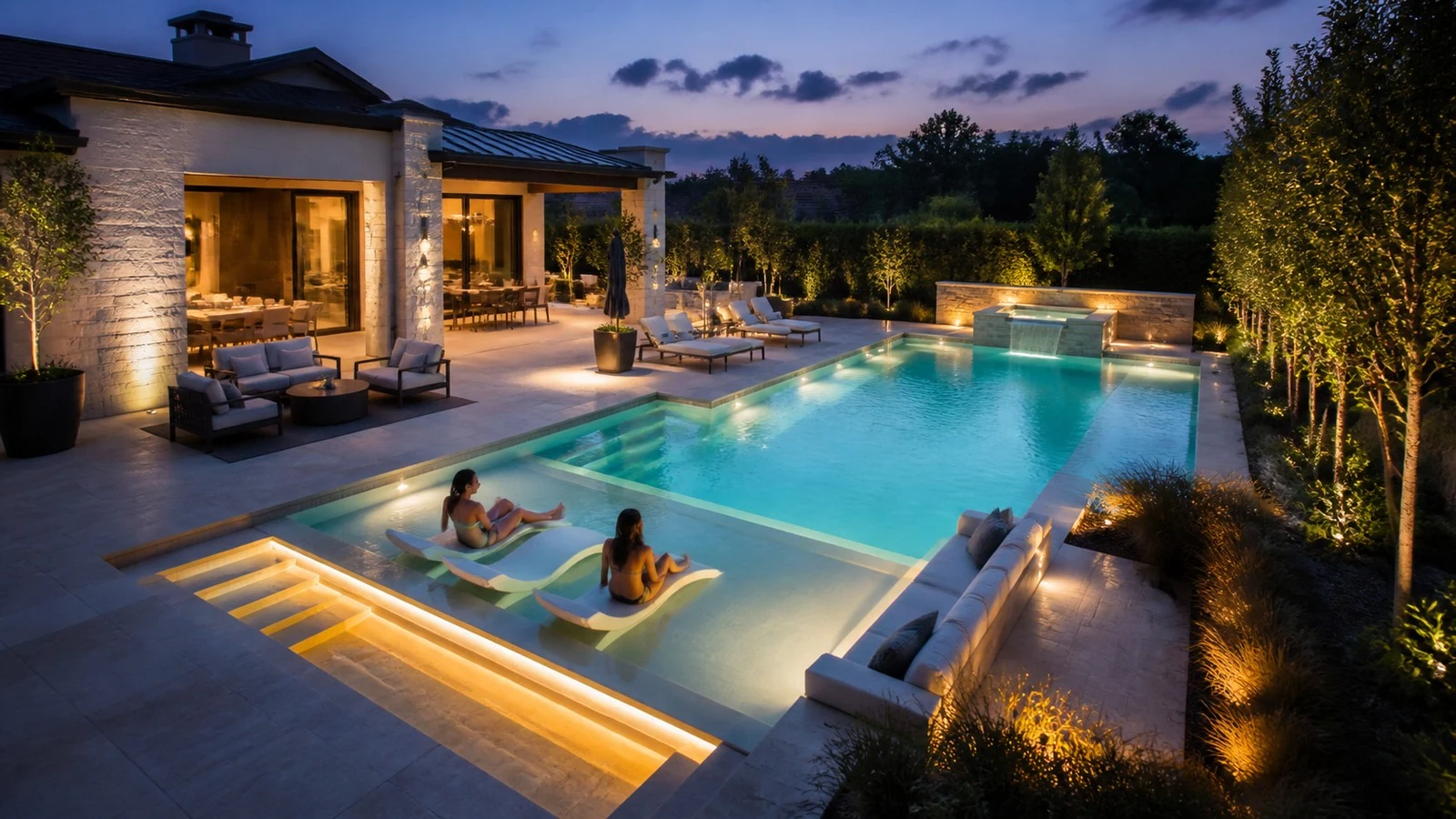
5. Use light to explain the levels
At night, the entry sequence must remain understandable without becoming a bright display. Restrained step and shelf lighting can reveal changes in level, support safe movement and preserve the reflective character of the wider water surface. Light must clarify the architecture, not compete with it.
DESIGN READING | Warm, controlled light makes each submerged level readable at blue hour.
6. Compose one pool, not four features
Ledge, stair, bench and deep zone must feel like parts of one idea. Repeating alignments, edge thicknesses and finish transitions creates unity. The success test is whether the pool still reads as a complete, beautiful water body when every zone is occupied differently.
DESIGN READING | Multiple activities coexist within one coherent architectural composition.
Design Check
- Confirm the entry is visible from primary approach points.
- Keep the main swimming axis free from social seating.
- Coordinate ledge dimensions with intended furniture and use.
- Review every depth transition in daylight and at night.
Reference Notes
PHTA-5 Standard for Residential Inground Swimming Poolshttps://www.phta.org/pub/?id=69c7ed55-f0d0-e8ca-857e-31bfdfe004ee