
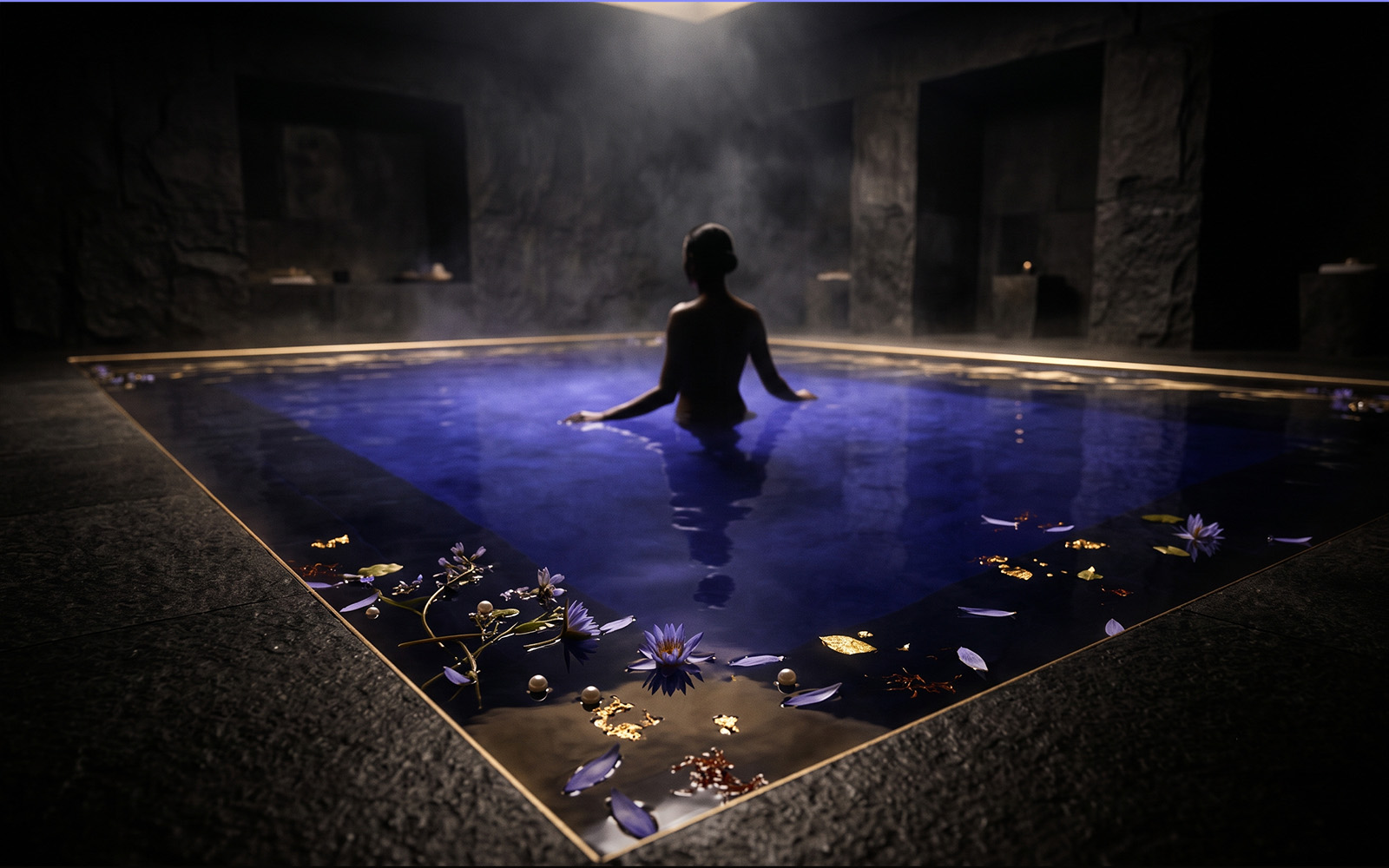
MAZACURE uses Vata, Pitta and Kapha as a sensory design language for colour, aroma, temperature, texture and seasonal immersion environments.
Ayurvedic traditions use the language of Vata, Pitta and Kapha within a much broader view of the individual, environment and time. In a contemporary water experience, that language defines a coherent sensory direction. Practitioner-led tradition governs doshic assessment, while validated formulation data selects ingredients.
Translate qualities into atmosphere
A designer can work with contrasts established in doshic language: cool and warm, bright and subdued, moving and still, light and grounding. These qualities help organise colour, temperature, sound, aroma, pace and time of day.
For example, a cooler visual palette and shaded setting can guide a summer concept. A warm material palette, protected route and gentle water movement can suit a cooler evening. These are design decisions—not a statement that the environment corrects a person’s constitution.
Keep ingredient decisions separate
Ingredient selection begins with formulation, exposure, allergy, compatibility and regulatory review. A defined technical brief performs that work. The traditional practitioner holds the cultural scope, while the pool operator follows a repeatable dose and validated water-care procedure.
- Let users choose an experience by mood, time and sensory preference.
- Present every short quiz as a sensory mood-selection tool.
- Provide ingredient transparency before use.
- Offer a neutral option for scent-sensitive guests.
- Direct individual medical questions to a licensed clinician.
A clearer guest choice
Instead of asking guests to identify a dosha, describe the ritual plainly: “cool and quiet,” “warm and grounding,” “bright and morning-led,” or “ceremonial and floral.” This respects personal preference, improves informed choice and gives operators language they can deliver consistently.