

MAZACURE defines the pool-design decisions that turn water into daily life through arrival, seating, scale, light, comfort and shared human experience.
A pool can be visually perfect and still sit unused. The deciding factor is neither size nor expense. It is whether the water belongs to the routines, relationships and climate of the people who live around it.
That is why the strongest brief begins with verbs: gather, play, float, train, talk, cool down, recover, watch the children, share dinner. Once the verbs are clear, form and equipment can serve a purpose instead of becoming the purpose.
Design the moments before the object
Imagine an ordinary week rather than a perfect holiday. Who uses the water before breakfast? Where does a parent sit while a child swims? Can two people talk from the shallow ledge to the terrace? Is there a comfortable place to dry off without crossing an air-conditioned room?
These small scenes reveal the real programme. A family pool can need a generous shallow shelf, a shaded observation point and a table close enough to remain part of the activity. A couple’s courtyard pool can value privacy and night lighting over maximum swimming length. A recovery pool needs predictable temperature, safe access and a calm route from changing area to water.
Make the edge do more work
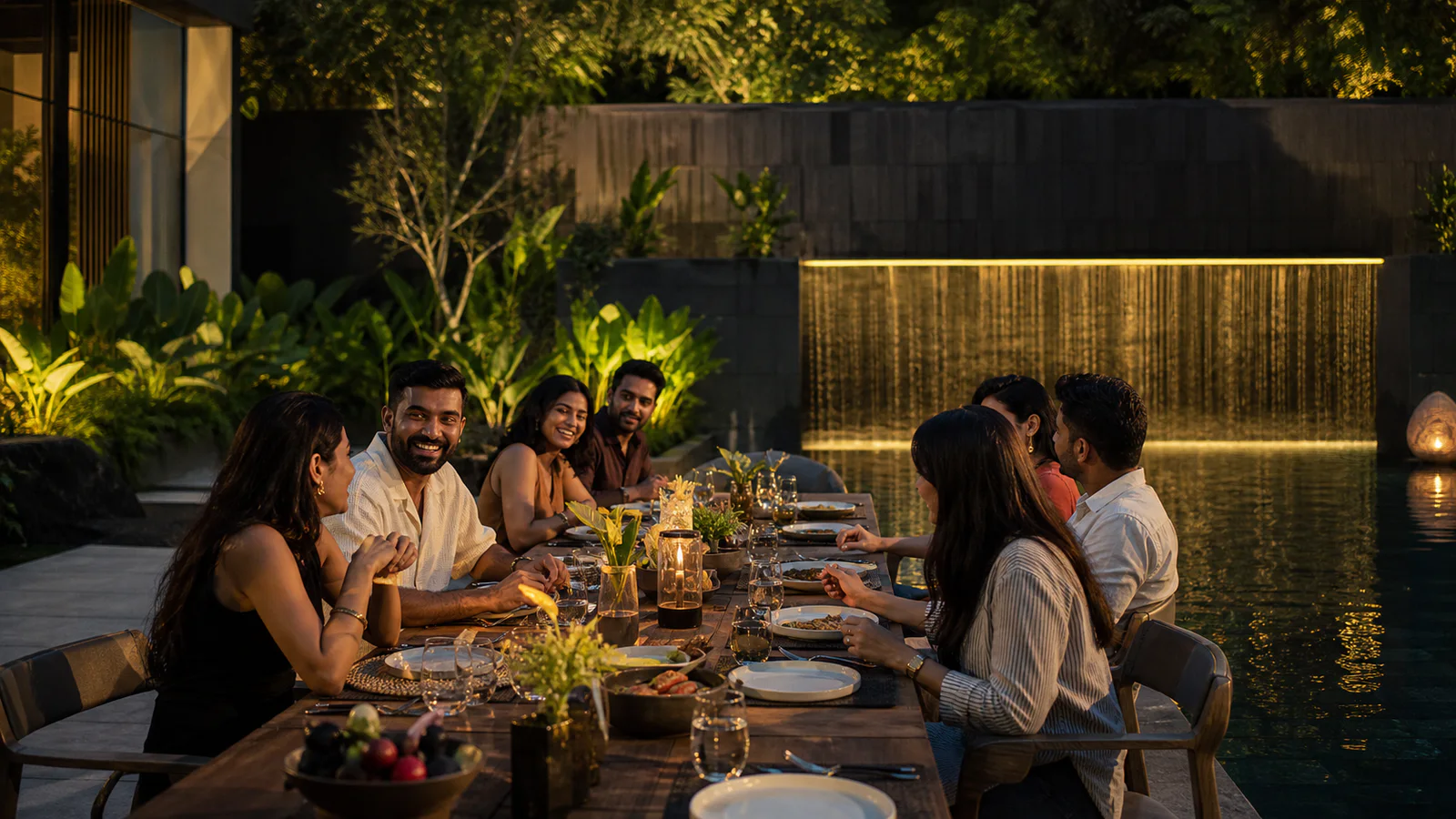
The water’s edge is where most of pool life happens. It is a seat, a threshold, a play zone, a view and a safety boundary at once. A successful edge offers choices: sun and shade, feet in and feet out, active and quiet, private and social.
Define ledge depth, step geometry, hand support, finish temperature, slip resistance and the relationship to nearby seating. Wide coping can look generous in a drawing but become uncomfortable if it is too hot to touch. A dramatic level change can create a striking photograph while making everyday supervision and access harder.
Place water close to life
Connection is governed by proximity. When a pool is separated from the house by a formal lawn, awkward door or service route, using it becomes an event. When it relates naturally to the kitchen, family room, shaded terrace or wellness space, it becomes part of the day.
Proximity does not mean sacrificing privacy or safety. It means designing clear visual connections, controlled access and a comfortable sequence. The goal is for people beside the pool and people inside it to remain part of the same gathering.
Design for more than the confident swimmer
A truly social water environment welcomes different ages, abilities and levels of confidence. That can include gradual entry, visible steps, handrails positioned with care, shallow areas for sitting, non-slip routes, rest points and a layout that allows supervision without isolation.
Accessibility requirements vary by project and jurisdiction, but inclusive thinking must begin during concept design. It is much harder to add dignity and ease after structure, levels and finishes are fixed.
Plan for the hours people are actually home
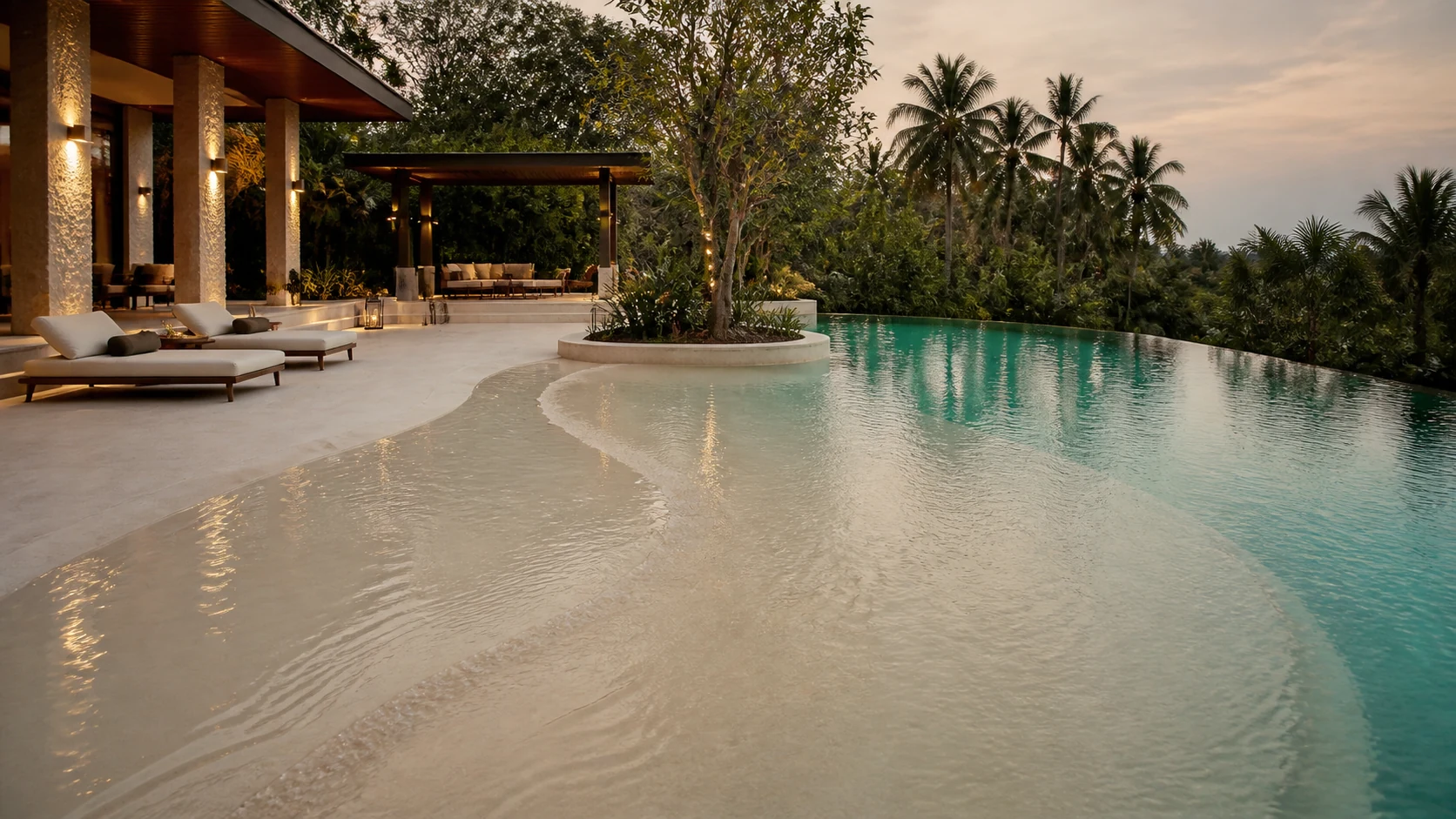
In warm climates, the pool can be most valuable in the evening. Good night-time design is not just underwater colour. It coordinates path lighting, faces, steps, planting and reflected glare so that people feel safe and comfortable without turning the garden into a stadium.
A small number of purposeful lighting scenes can support different uses: an arrival scene, a family swim, a quiet evening and a safe closed state. Automation can make those scenes easy, but the experience must remain understandable and operable when a phone is unavailable.
Quiet engineering protects the social experience
Pump noise near dining, cold draughts from poorly placed equipment, inaccessible filters and complicated controls all pull attention away from the water. Plant-room location, hydraulic design, drainage, ventilation and service access shape daily life while remaining quietly behind the scenes.
The easier a pool is to understand and care for, the more readily it becomes part of the home. Clear operating states, sensible maintenance access and a handover built around the owner—not just the installer—are design decisions too.
A better first conversation
Before choosing shape, finish or technology, answer these questions:
- Which three moments do we want this water to make possible?
- Who needs to feel welcome and confident at the edge?
- When will we use it—morning, afternoon, evening or all three?
- What must people beside the water be able to do?
- What level of daily and seasonal care fits our real routine?
Those answers create a brief with emotional clarity and practical value. They help the architect, pool designer, landscape team and engineer make connected decisions—and give the client a better way to judge them.