
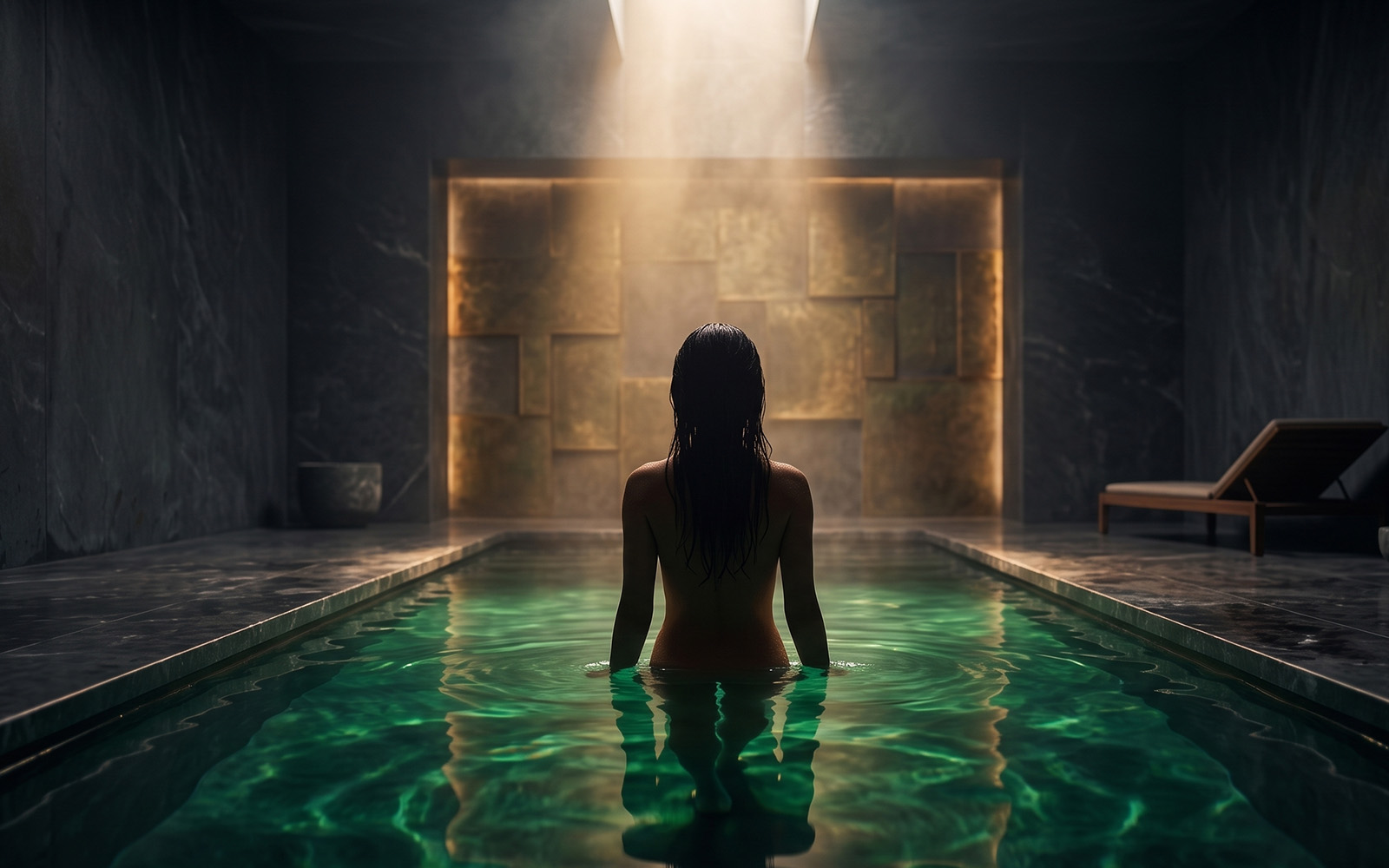
MAZACURE defines the botanical immersion water standard: ritual design, measured dosing, circulation, filtration, monitoring and validated operation.
Botanical immersion water begins with a sensory idea: colour that changes the character of the pool, an aroma that marks the transition into quiet, and a setting that makes bathing feel deliberate. Botanicals enter water as part of the operating load, which defines the engineering question.
A conventional pool system is built to circulate, filter and keep water within defined operating limits. Introduce pigments, oils or fine organic material and the system must now manage clarity, surfaces, filter loading, dosing consistency and cleaning as well. The experience above the water and the machinery below it have to be developed together.
Start with three connected layers
1. The ritual
Define the intended occasion before discussing equipment. Is this a private evening immersion, a scheduled spa treatment, a resort experience or a feature within a larger pool? That decision affects session length, water temperature, turnover between users, aroma intensity, lighting, supervision and how quickly the water must return to its normal state.
The ritual brief must describe what a guest will see, feel and do. It must also state what the experience does not claim. Sensory language—calm, warm, forest-led, floral, meditative—is different from a medical or physiological promise.

2. The delivery system
Consistency matters. Hand-pouring an unknown amount of concentrate into a changing body of water makes the experience difficult to repeat and harder to evaluate. A controlled concept needs a known water volume, a defined preparation, measured delivery, adequate mixing and a record of each cycle.
Circulation then has to distribute that dose without creating concentrated pockets. Inlets, outlets, flow rate, mixing time and pool geometry all influence the result. A shallow plunge and a large resort pool can share an aesthetic direction; each receives its own verified operating recipe.
3. The validation plan
“Natural” does not replace testing. Ingredients need to be reviewed in their actual formulation, concentration and route of exposure. The complete water system needs its own compatibility and safety work because temperature, residence time, other treatment chemicals and construction materials can change how a formulation behaves.
A responsible programme defines what will be tested, by whom, against which standard and for which intended use. Only then can product language move from an evocative concept toward a supportable commercial statement.
Why filtration must be designed for the real load
Botanical material can appear in several forms: dissolved colour, very fine suspended solids, oils, extracts and larger particles. Each behaves differently. Some components can pass through a coarse filter; others can collect at the waterline, load the media or settle in low-flow areas.
That means the treatment sequence must be tested with the intended formulation—not designed around clear water and assumed to cope later. The practical questions include:
- How quickly does the water reach an even appearance after dosing?
- Where do pigments, oils or residue accumulate?
- What treatment step removes the added organic load?
- What is the filter-cleaning method and service interval?
- Can the system return the water to its baseline condition predictably?

Measure more than appearance
Clear-looking water is not a complete operating result. A pilot must record the normal water-quality parameters required for its setting, together with formulation-specific observations such as dose, mixing time, temperature, colour stability, filter loading, surface residue and cleaning time.
Good records turn each session into useful evidence. They reveal whether a result can be repeated, whether a component is drifting and whether the experience remains practical for the people who operate it.
A useful path from concept to pilot
- Write the experience brief. Define the user, setting, duration, sensory direction and prohibited claims.
- Characterise the formulation. Confirm ingredients, preparation, concentration, stability and relevant exposure considerations.
- Test at small scale. Observe mixing, staining, foaming, residue and interaction with candidate materials.
- Design the treatment loop. Match dosing, circulation, filtration, monitoring and recovery to the actual load.
- Run a controlled pilot. Use a known water volume, written operating procedure and defined test plan.
- Review before scaling. Change the system or the ritual when evidence says the concept is not yet repeatable.