
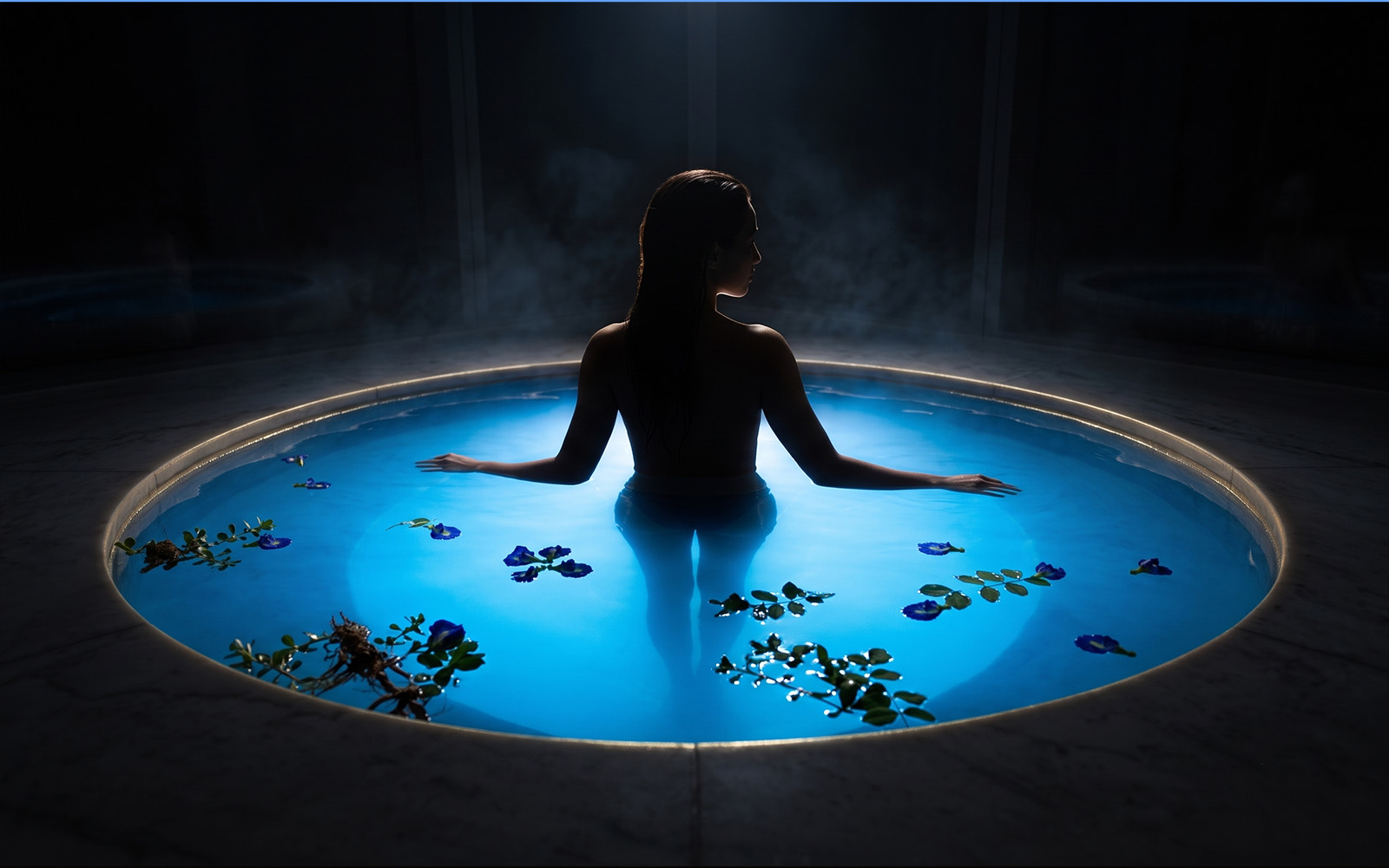
MAZACURE shows how to choose an immersion ritual by aligning colour, aroma, temperature, light, duration and water-system operation around one intention.
A memorable water ritual feels coherent. Temperature, colour, aroma, light, sound and pace all point in the same direction. When they compete, the experience becomes theatrical rather than restorative. The simplest way to choose well is to begin with one clear intention.
1. Name the moment in ordinary language
Define the experiential outcome when the person leaves the water: mark the end of a long day, create a quiet morning pause, welcome two people back into conversation or add ceremony to a spa journey.
A sentence is more useful than a label: “A low-stimulation evening immersion before bed” gives the designer more direction than “calm.” “A warm, social pool moment after dinner” is more actionable than “vitality.”
2. Let timing shape the palette
Morning and evening rituals ask for different choices. In the morning, natural light, fresh air and a restrained aromatic profile can help the water feel clear and open. In the evening, glare control, warm edge lighting and slower transitions matter more.
Season and climate matter too. In the Gulf, shade, controlled surface temperature and a comfortable water path shape every peak-heat ritual. In Kerala’s wetter months, covered arrival, drainage and humidity become part of the experience. The ritual begins before immersion and continues until the guest is dry and comfortable.
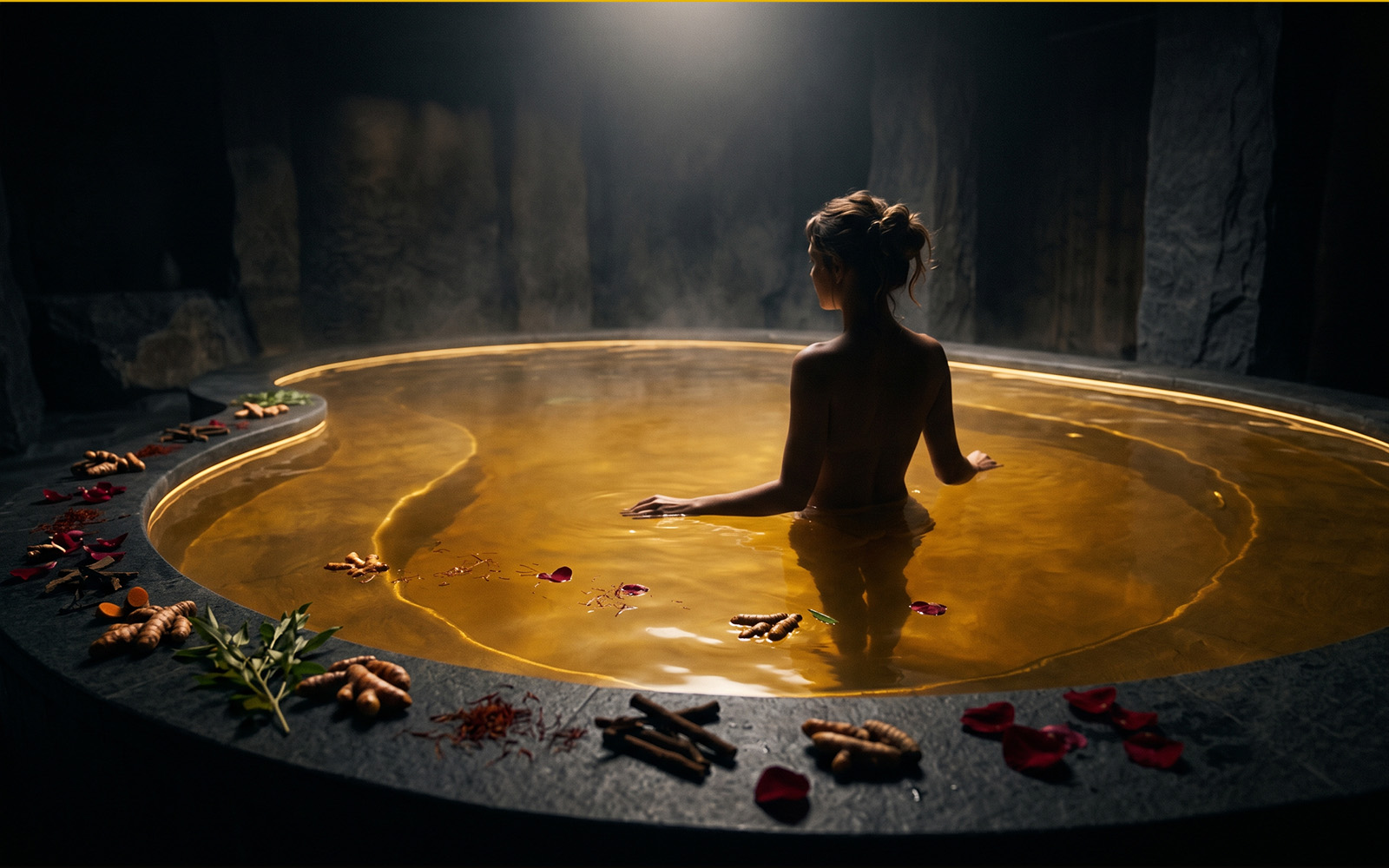
3. Build one sensory palette—not five separate effects
Colour
Colour changes the perceived character of the whole volume. Deep blue can feel nocturnal and still; a warm amber can feel ceremonial; a restrained green can suggest a forest-led direction. Saturation must be evaluated in the real pool because depth, finishes and lighting all alter it.
Aroma
Aroma must sit inside the space rather than announce itself from the entrance. Define ventilation, the distance from the water, competing scents and individual sensitivity. Any formulation introduced into water requires appropriate safety and compatibility review; ambient fragrance and in-water formulation are not interchangeable.
Light and sound
Light must help people understand edges, steps and depth while preserving the desired atmosphere. A single warm scene creates greater coherence than a constantly changing colour show. Sound works the same way: water movement, landscape and quiet can already provide enough.
4. Match the ritual to the water setting
A private plunge can change character quickly and support a tightly timed ritual. A family pool has more variable users and must return easily to everyday operation. A spa treatment pool needs written procedures, turnaround time and staff training. A resort experience must remain consistent across shifts and occupancy levels.
Before selecting a concept, answer five operational questions:
- Who uses the water, and who supervises the session?
- Is the water dedicated to the ritual or shared with normal swimming?
- How is a dose prepared, measured and recorded?
- How long does setup, circulation and recovery take?
- What happens when a user has a sensitivity, the water falls outside limits or equipment is unavailable?

5. Create a simple ritual sequence
A strong sequence does not need many steps. It needs a clear beginning, middle and end.
- Arrival: lower the pace through privacy, temperature, a place for belongings and an unhurried transition.
- Orientation: explain the water, duration, safe entry and what the guest can expect.
- Immersion: keep controls simple and the sensory field consistent.
- Return: provide a comfortable exit, towel, seating and time before moving on.
- Reset: record the cycle, inspect the water and prepare the system for its next use.
Use names carefully
Campaign names are powerful shortcuts for a mood, but they can also imply outcomes. During development, pair each name with a plain-language sensory description and an explicit status. “Forest-led concept with an emerald visual character” is clear. A promise that the water detoxifies, treats pain, improves immunity or changes a health condition requires a very different level of substantiation and regulatory review.