
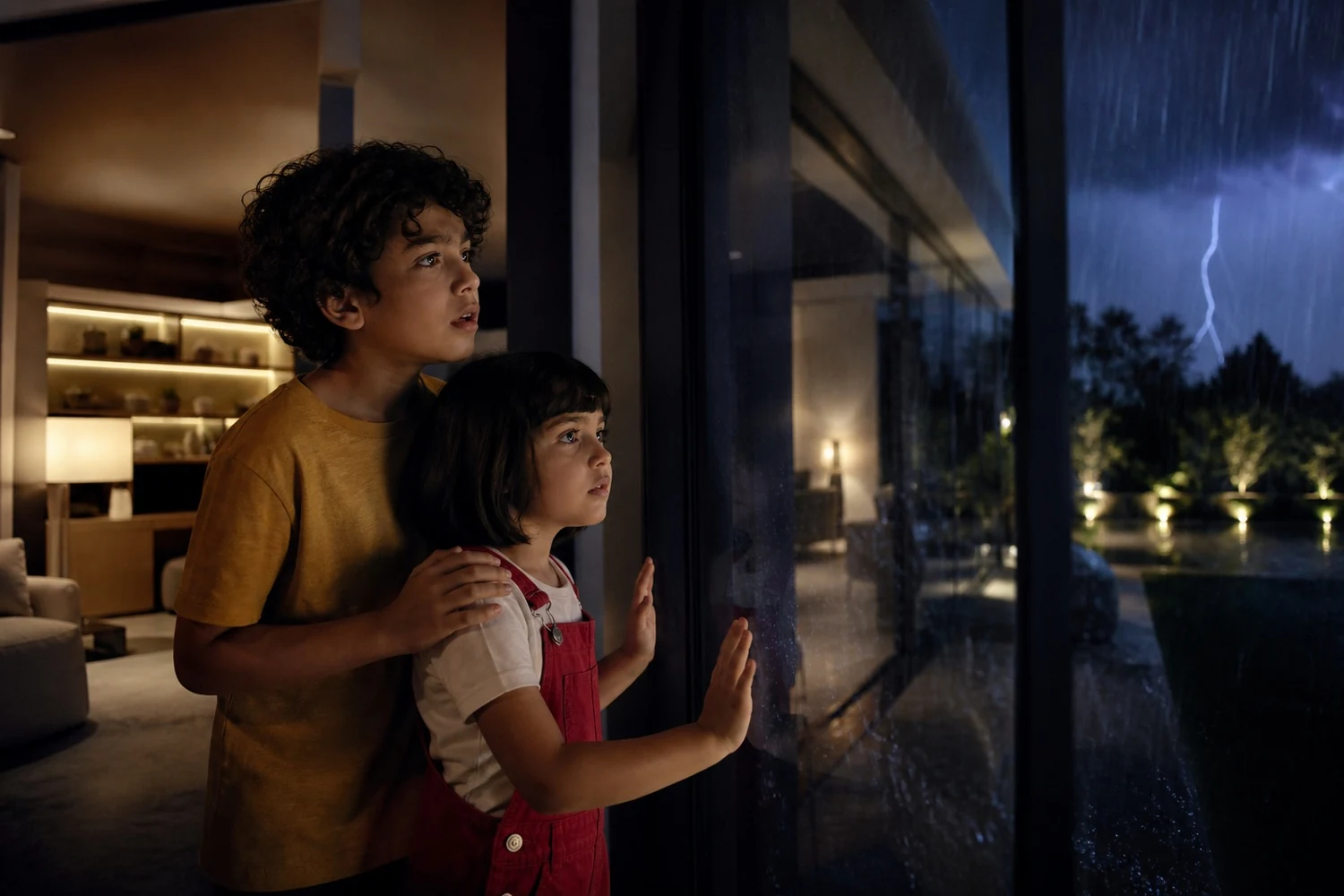
Two children discover that safety can feel like warmth, imagination and a blanket roof full of stars. A MAZACURE standard.
Thunder at the window
The first thunderclap found Adam and Leila with their noses pressed to the glass. Rain crossed the garden sideways. A white branch of lightning opened the sky, and Leila stepped backward into her brother.
Adam was ten, which meant he considered himself too old to be frightened and exactly the right age to explain frightening things incorrectly. He told her thunder was only the clouds moving furniture. Another flash arrived. Neither laughed.
Outside, the internet connection faded with the weather. Inside, the essential lights remained steady. The hallway stayed warm. The garden path held a soft glow through the rain. Their home did not make the storm disappear, but it refused to become frightening with it.
A better kind of shelter
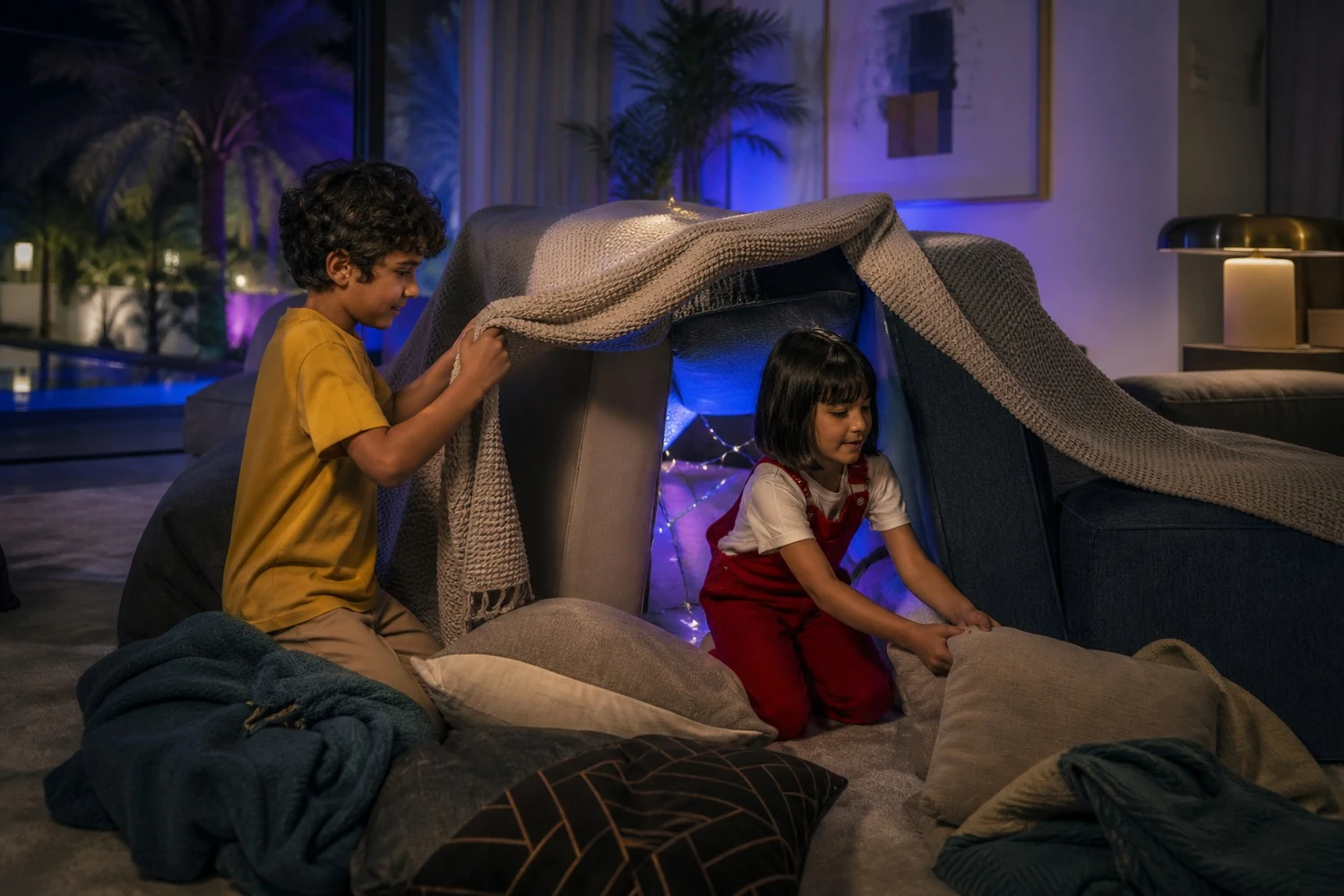
Their mother brought blankets from the cupboard. Their father carried sofa cushions into the middle of the living room. The children understood immediately: if the sky insisted on being dramatic, they would build something dramatic beneath it.
Adam engineered the roof between two chairs. Leila rejected three entrances before approving a tunnel made from the ottoman. They chose a deep-blue room look and added violet at the edges. Small lamps glowed beneath the blankets like campfire light.
With every cushion, the thunder moved farther away. Fear did not vanish; it changed shape. It became a reason to sit closer. It became a monster outside the castle, safely assigned its role in the game.
The galaxy inside
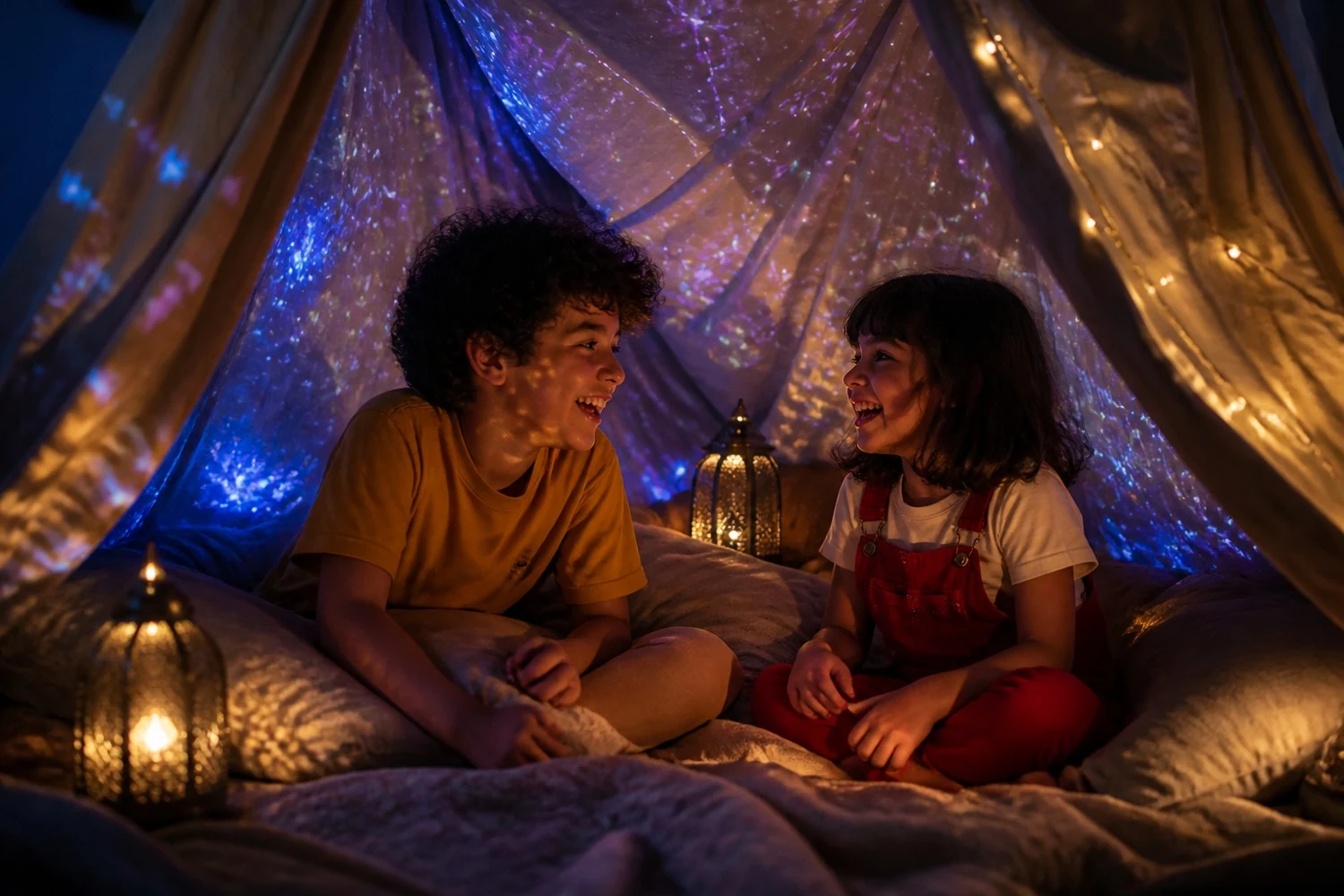
Inside the fort, the ceiling was low enough to touch. Light filtered through knitted fabric in blue and purple constellations. Adam told a story about two explorers trapped on a storm planet. Leila corrected him: they were not trapped, because they had brought snacks.
They listened to rain drum against the glass and gave each sound a name. The low rumble was a giant rolling a bowling ball. The sharp crack was a dragon sneezing. Their laughter grew louder than the weather.
Technical language defines resilience through systems. In a family home, it can be much simpler: the lights stay on, familiar routines remain available, and children feel that the adults - and the space around them - are still in control. Local operation anchors reassurance while connected services extend control.
Morning's evidence
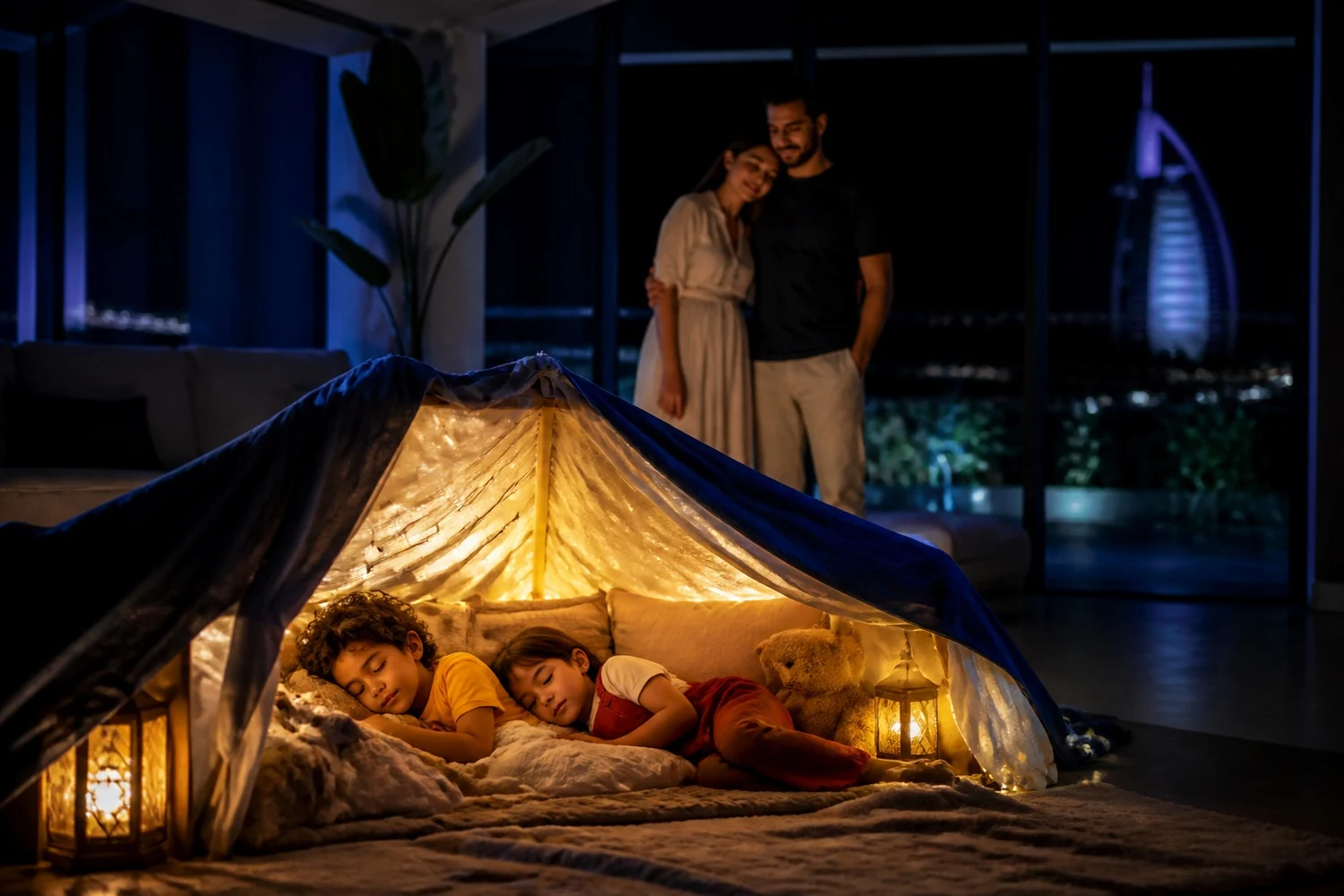
The storm passed before midnight. Their parents found them asleep inside the fort, Adam's arm across the entrance and Leila holding the final biscuit. The room had settled into its quiet night setting. Outside, water shone along the path.
In the morning the fort looked smaller, as magical places do in daylight. But the story had already improved in the telling. At breakfast, Leila announced that she had not been scared at all. Adam, exercising the loyalty of an older brother, agreed.
AURA is designed for the calm moments people notice and the resilient moments that work quietly in the background. The result is a house that turns intelligence into courage - sometimes with safety, sometimes with steady light, and sometimes with exactly the right shade of blue beneath a blanket roof.
Aura Reflection
The technology in this story is intentionally quiet. The experience is the product: a space that protects attention, supports connection and feels naturally ready for the people inside it.