

When a mother returns, thoughtful design becomes a language of dignity, care and welcome. An original MAZACURE story of intelligent, human-centred design.
Preparing without fuss
Nadia changed the guest room three times before admitting that she was nervous. Her mother was coming home after several weeks of recovery, and every object suddenly looked like an obstacle. The rug moved. The chair moved. The bedside lamp moved, then moved back.
She wanted the house to say, You are secure here. She wanted it to preserve independence. The difference lived in details: a clear path from bed to bathroom, gentle light that would not blind sleepy eyes, shades that rose gently each morning, controls simple enough to disappear into routine.
By sunset, the room felt neither clinical nor overprepared. It felt like her mother: dusty rose, soft linen, a book waiting beside the chair and the faint scent of cardamom.
The gate opens
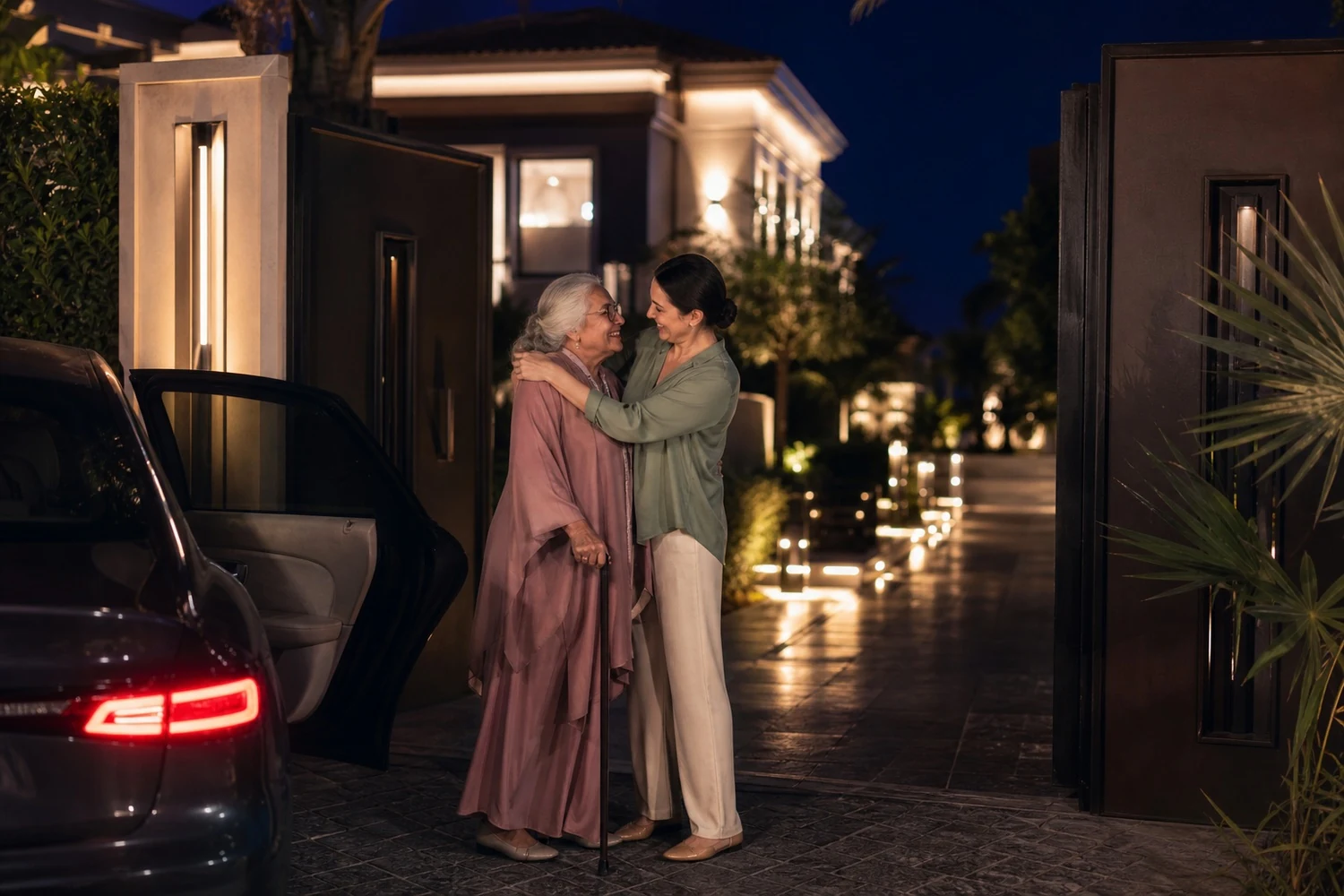
The car arrived after dark. Before Nadia reached the door, the gate was already open for the expected arrival and the path had warmed to a comfortable glow. Her mother stepped carefully from the car, one hand on her cane, the other reaching for her daughter.
Nadia had planned to say something reassuring. Instead, they hugged beside the car and both began to cry. The driver looked away with professional kindness.
Welcome is not only access. It is the sequence of small permissions a place gives us: the gate opens, the way ahead is visible, the entrance does not rush us, and someone we love is waiting at the end of the path.
Beside, not ahead
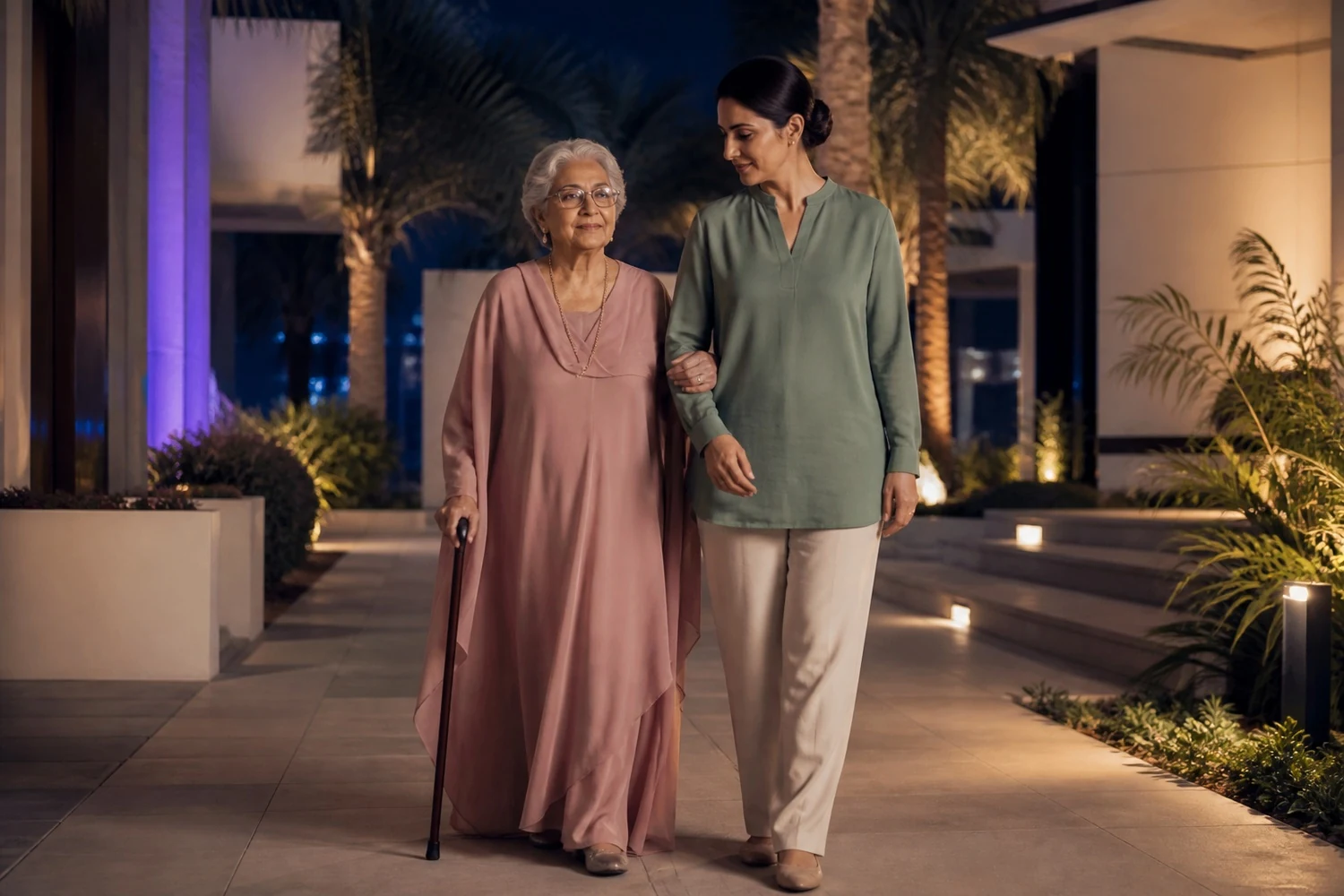
Nadia walked half a step behind her mother. It took discipline. Every instinct wanted to hold her elbow, direct each footstep, support every movement. Her mother looked at the illuminated path, adjusted her cane and moved at her own pace.
'You can walk beside me,' she said. Nadia laughed, relieved to hear the old sharpness in her voice.
Care is strongest when it protects independence rather than replacing it. Thoughtful lighting, clear access and dependable routines can make a home more supportive without turning the person being supported into a patient. The technology serves dignity precisely because it does not call attention to the help being given.

Morning tea
The next morning, the shades rose slowly after the room was already awake. Nadia found her mother by the window, glasses low on her nose, reading yesterday's newspaper as though nothing significant had happened.
They made tea and sat together. Sunlight moved across the floor. Her mother inspected the room, the path, the lamp and finally her daughter. 'You worried too much,' she said. Then she touched Nadia's hand. 'But you prepared beautifully.'
AURA brings access, lighting and routines into one calm experience, but the real measure of that experience is human. Does the home make welcome easier? Does it help someone move with confidence? Does care feel like freedom? A space feels right when the people returning to it feel that they still belong completely.
Aura Reflection
The technology in this story is intentionally quiet. The experience is the product: a space that protects attention, supports connection and feels naturally ready for the people inside it.