
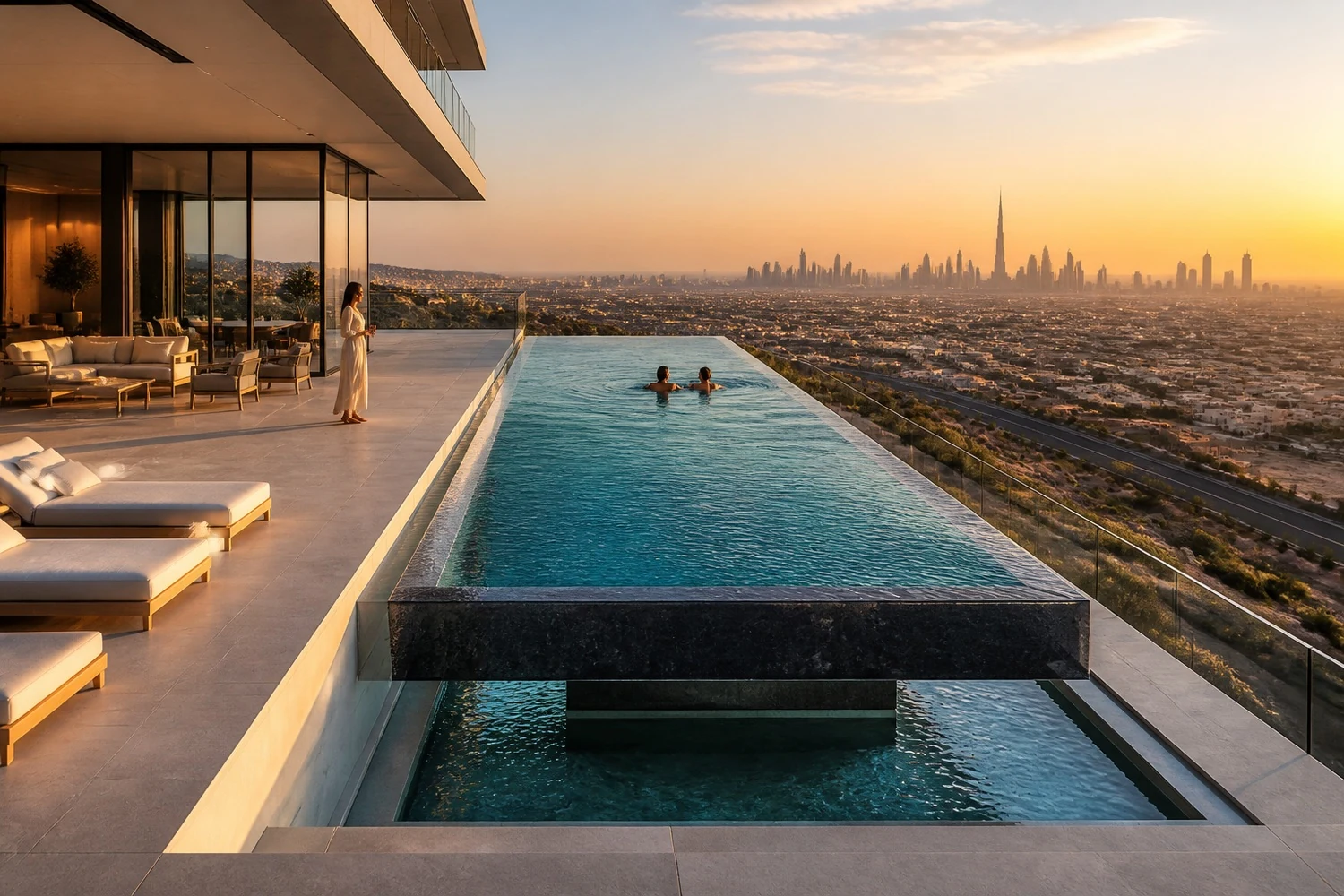
The effect is created by alignment: waterline, viewer position and distant view must work as one composition. A MAZACURE standard.
1. The view creates the illusion
An infinity pool is most convincing when the vanishing edge is placed on the strongest outward view. From the principal terrace, living room or approach, the upper waterline must visually meet sea, sky, desert or city horizon. A deliberate line of sight creates the effect through the waterline, edge and distant view.
The first image presents the ideal reading position. The entire pool is visible, yet the far edge almost disappears. People give scale without blocking the horizon. This is the architectural moment the remaining decisions must protect.
2. The fall is a second elevation
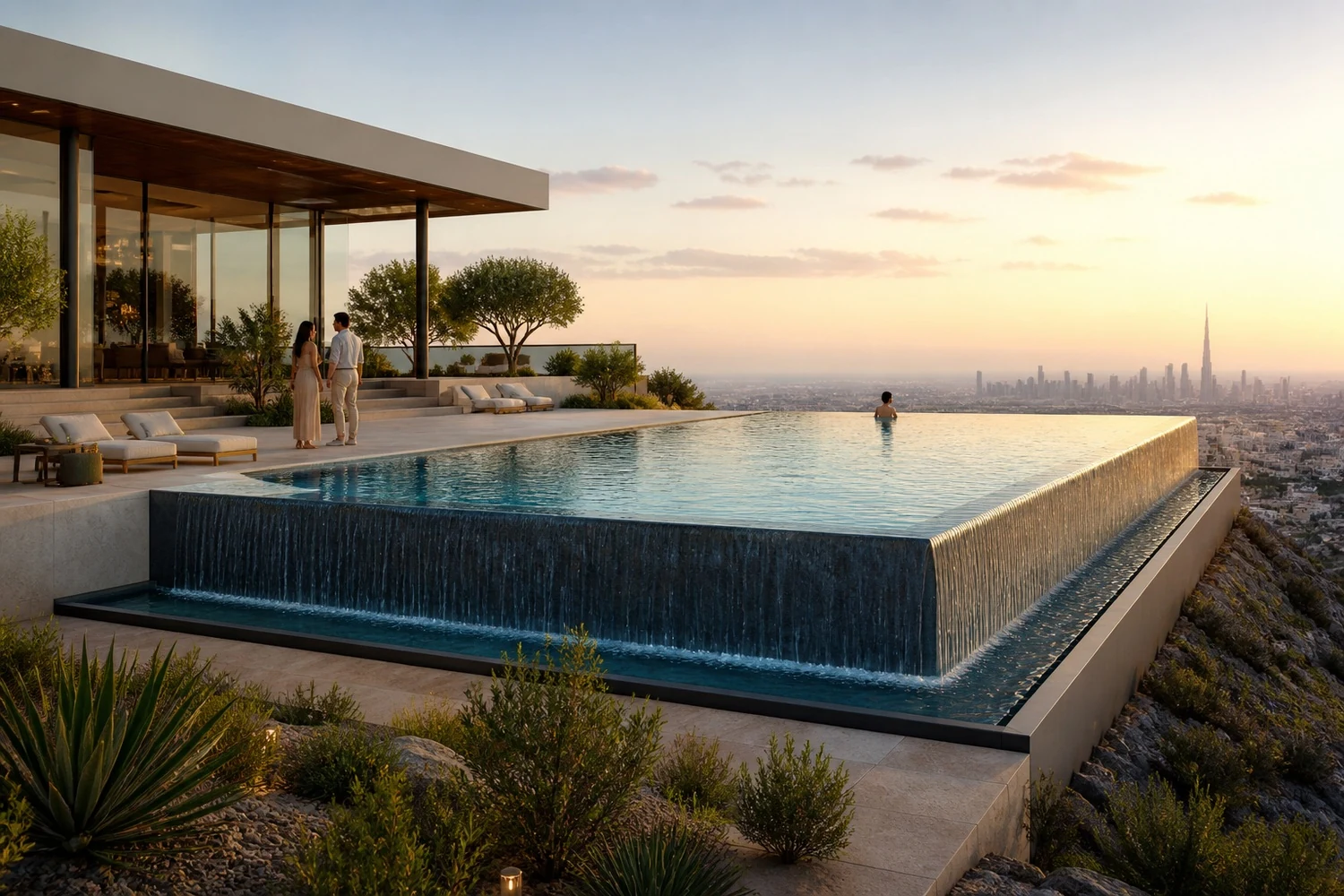
From the upper terrace, the edge is a thin line. From below or from the garden, the same feature becomes a waterfall wall. That means an infinity design has two public faces: the calm mirror above and the moving sheet outside.
A strong project decides whether the lower face must be concealed, planted around or celebrated. When visible, its height, material and sound become part of the architecture. The pool must look intentional from both levels, not impressive from one and unfinished from the other.
3. One edge, three stable sides
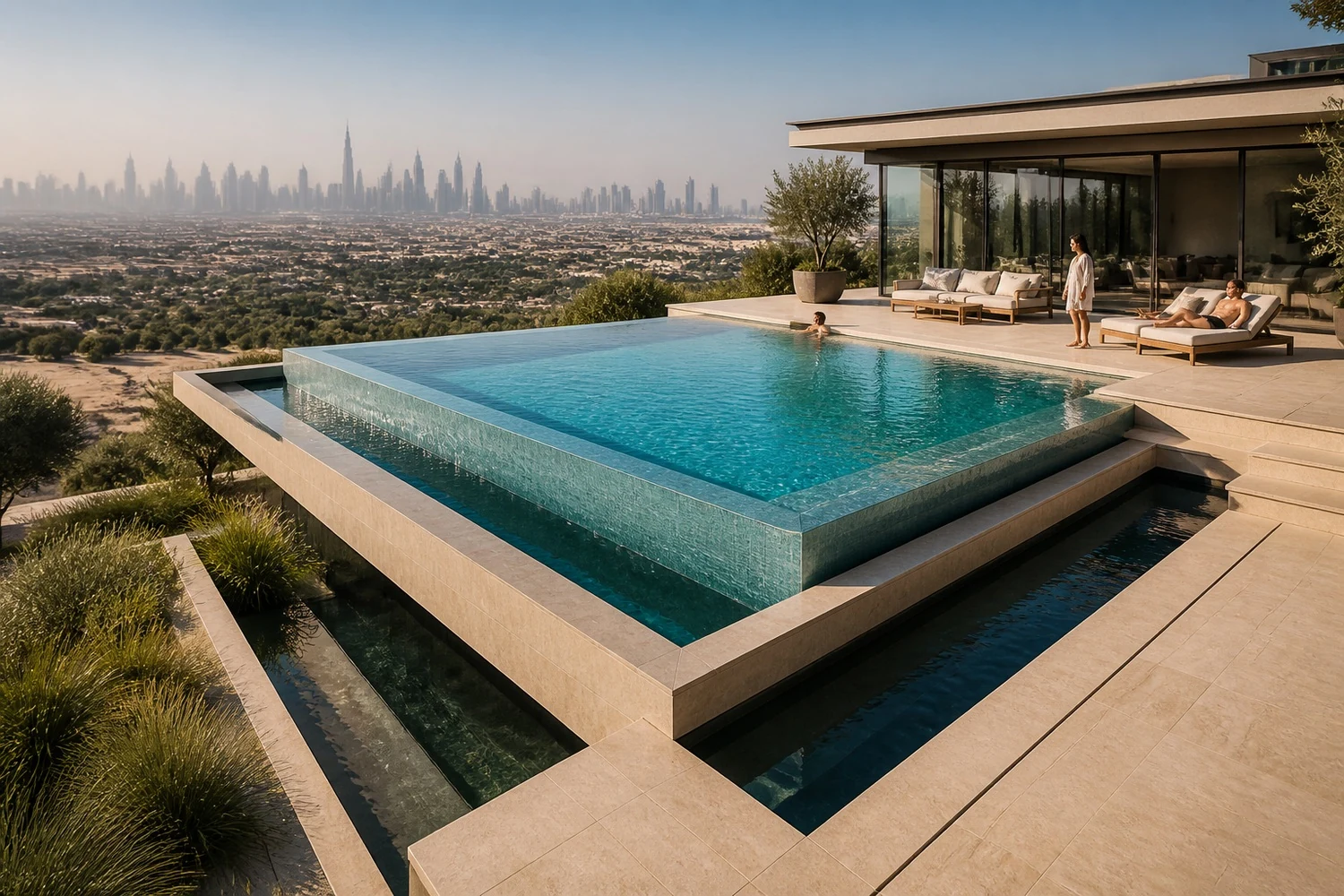
An elevated view reveals the basic hierarchy clearly: conventional containment on three sides and a single visual release toward the view. The chosen edge must reinforce the geometry of the property rather than fight it.
Long edges create a broad horizon effect. Short-end edges emphasise direction and make a lap pool appear to continue forward. A corner overflow can open two view corridors, but it also changes the visual calm of the rectangle. The best choice begins with the principal daily view.

4. Design from eye level
A terrace photograph is not enough. The edge must also be tested from a seated position, from inside the water and from the rooms that overlook it. A few centimetres of visual interruption can reveal the outer wall and weaken the disappearing effect.
From swimmer height, the water surface becomes the foreground of the landscape. This is where the infinity edge feels most immersive. Furniture placement, planting and guard elements must be considered against these real eye levels.
5. Night requires restraint
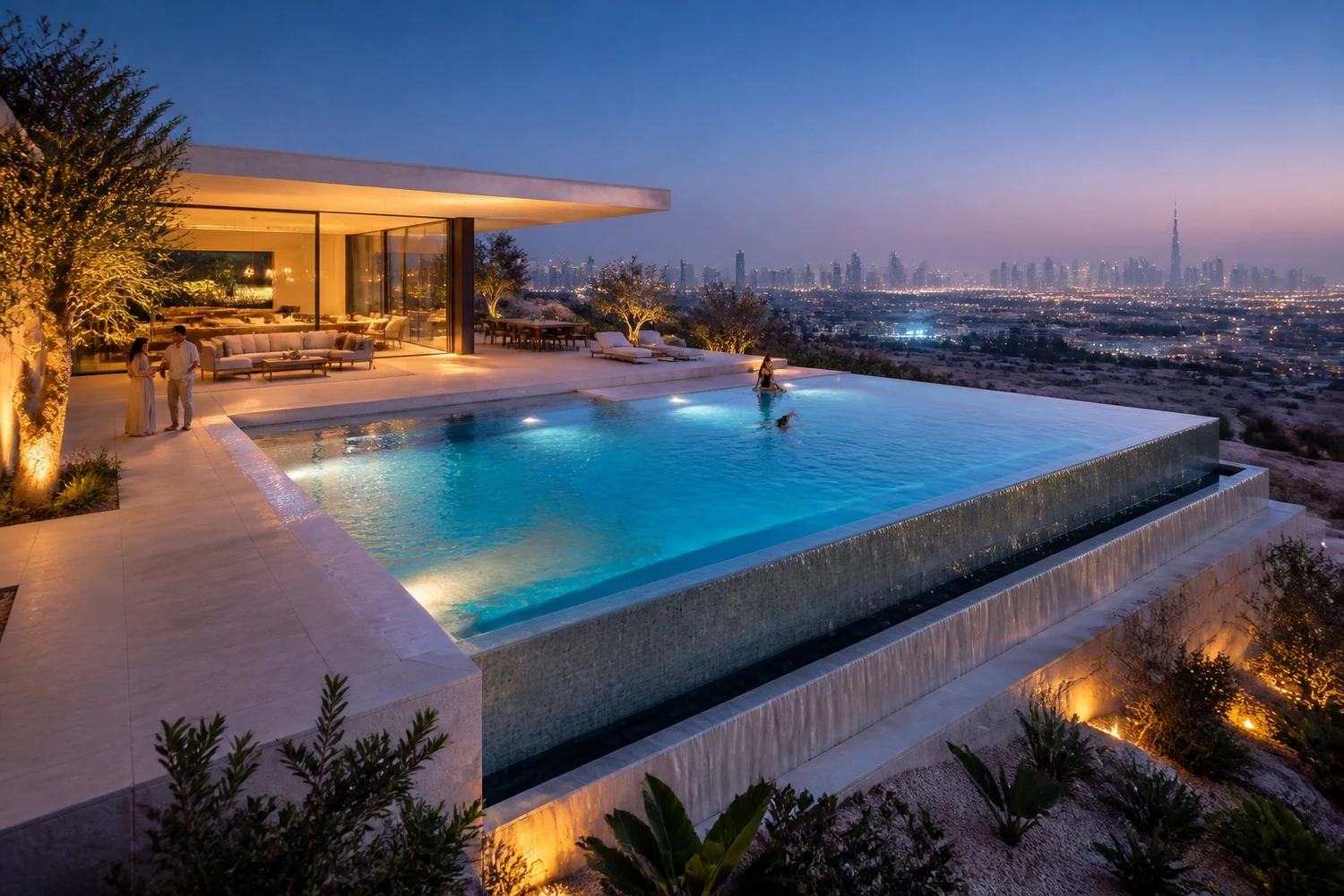
At blue hour, the horizon becomes less dominant and lighting takes over. Bright fittings close to the vanishing lip can turn the subtle edge into a glowing boundary. Lighting set back into the pool, combined with warm architectural illumination beyond it, preserves depth while keeping the outer line visually quiet.
The aim is not maximum brightness. It is continuity: the pool remains readable, swimmers remain visible and the edge still feels like a controlled transition toward darkness.

6. The AURA perspective
A premium infinity pool must behave as two coordinated experiences: mirror-like calm when the upper view is the priority, and a controlled cascade when the outer elevation becomes part of the scene. Lighting levels, feature timing and ambience must support those modes without making the owner manage them separately.
AURA treats the edge as an architectural composition first. Automation then protects the intended experience - calm by day, restrained illumination at dusk and a confident waterfall presence when the lower facade is being enjoyed.
Design Check
- Can the complete feature be understood from the primary approach?
- Does the design remain convincing from swimmer, seated and elevated viewpoints?
- Do daylight, blue hour and night lighting preserve the original architectural intention?
- Are people able to move, swim and gather without the feature competing with use?
Reference Notes
PHTA vanishing-edge education overview - https://portal.phta.org/Store/Product-Catalog/Product-Details?productid=%7BEB8FB955-DDA6-EB11-8115-000D3A0DE1%7D