
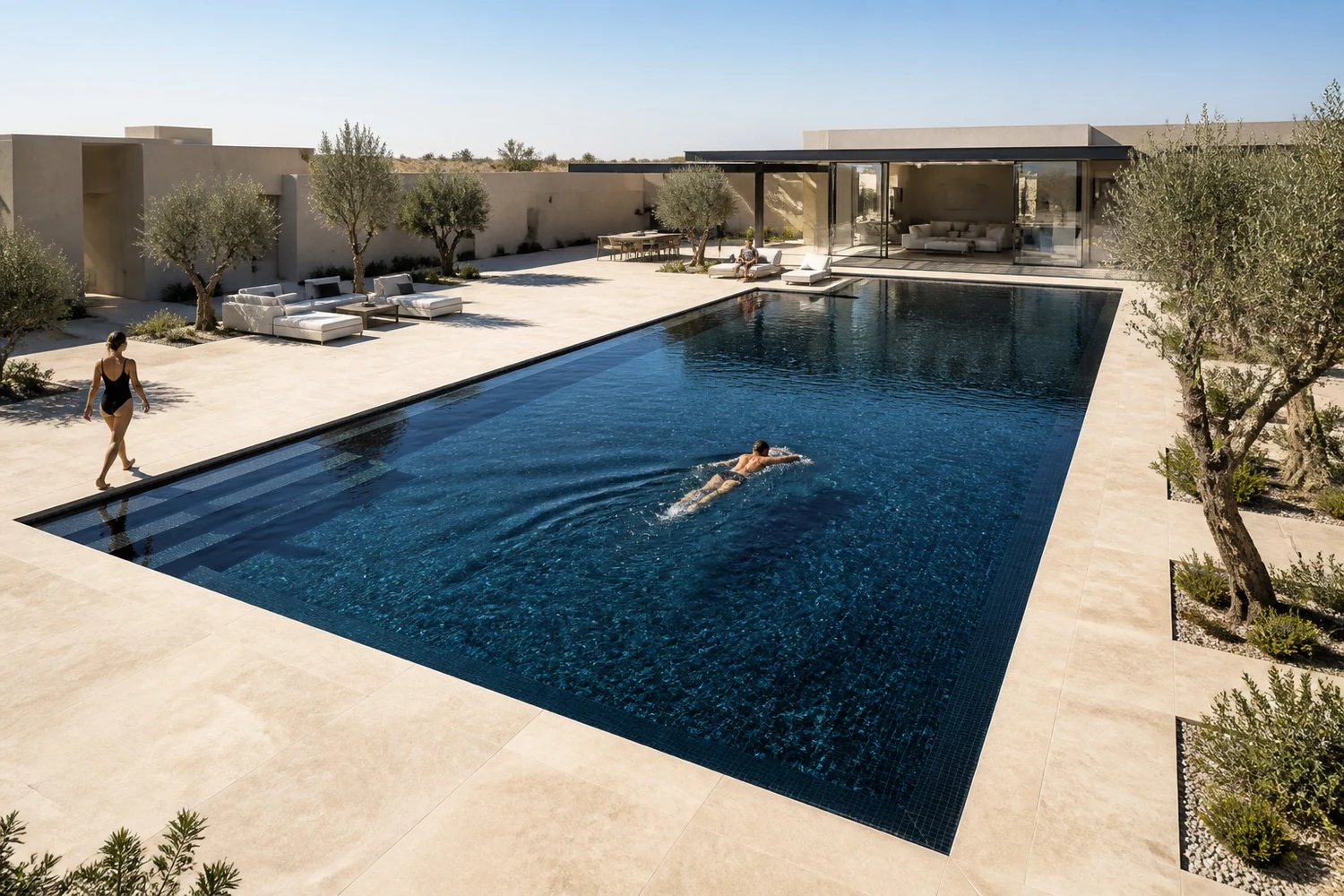
A dark interior does more than change colour; it changes how the pool holds sky, architecture and light. A MAZACURE standard.
1. Dark does not mean one colour
A charcoal or black-toned finish rarely makes every part of a pool appear equally black. Water depth, sun angle, surrounding colours and the finish aggregate all influence what the eye sees. Deep zones can read as dark navy; shallow zones reveal more of the actual material.
The first design decision is therefore the desired water character, not simply the sample colour. A dark finish can feel reflective and calm, dramatic and deep or naturally lagoon-like depending on context.
2. The mirror effect
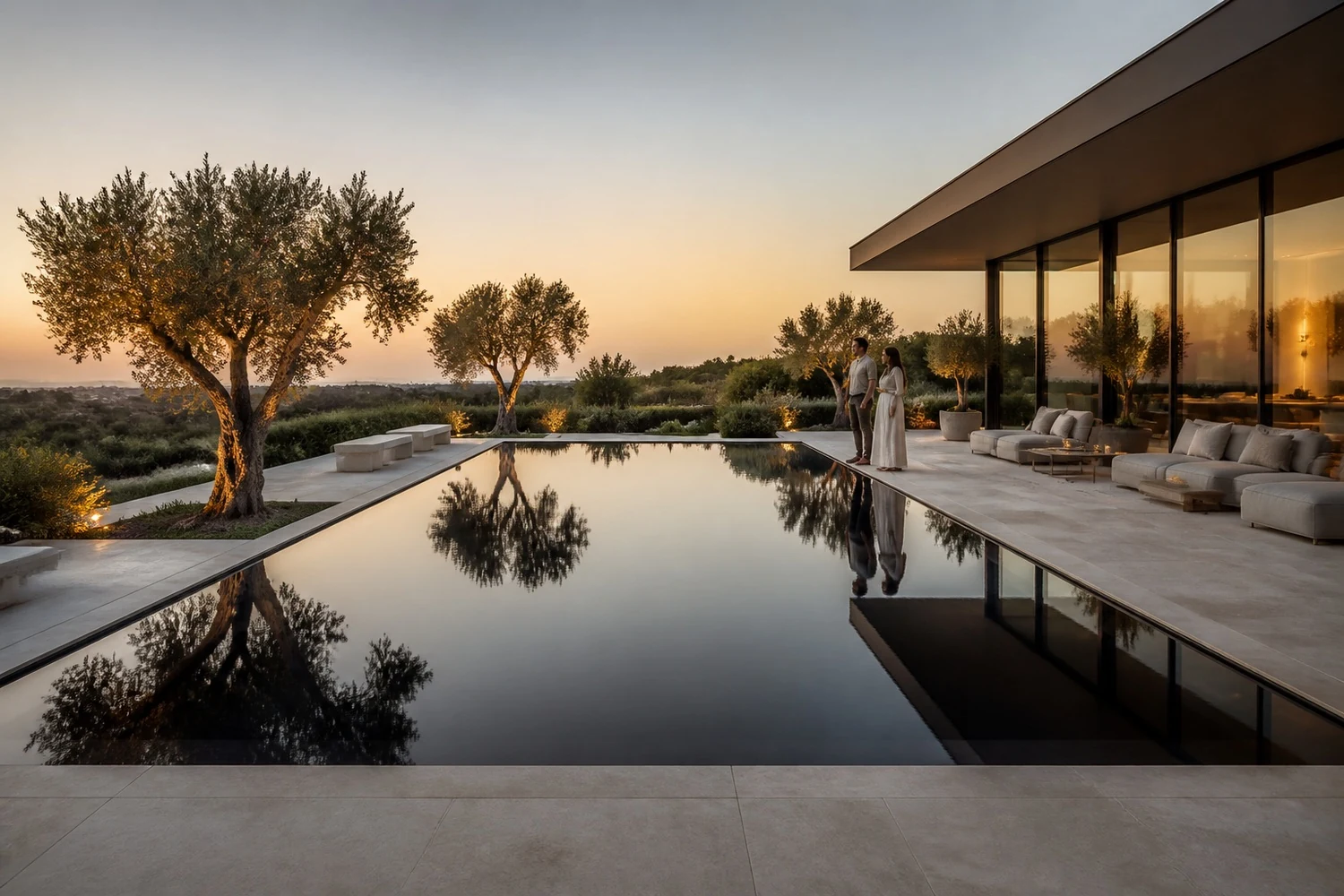
At dawn and during still conditions, a dark pool can behave like a landscape mirror. Trees, rooflines and sky become more prominent because the bright reflected subjects contrast strongly with the dark base.
This is why dark pools work especially well with sculptural planting and clean architecture. The composition above the water is effectively repeated below it. Untidy sightlines are repeated too.

3. Shallow and deep zones
An elevated view reveals a useful truth: finish colour is only one contributor to perceived water colour. Shallow shelves receive more light and expose texture; the deeper centre absorbs more light and appears darker.
Designers can use this gradient intentionally. A visible shallow shelf can make entry feel welcoming, while a darker swimming zone creates depth and visual drama.

4. Texture at human scale
Material samples must be assessed both dry and submerged, in direct sun and shade. Pebble size, mixed aggregate and surrounding tile affect whether the finish feels refined, natural or visually busy.
The detail must support the full pool. A beautiful sample that conflicts with paving, waterline tile or architecture will not become more coherent when multiplied across the shell.

5. Lighting without losing darkness
Over-lighting a dark pool can defeat the reason for choosing it. Bright cool fixtures can turn the water into an ordinary luminous blue plane. Restrained illumination can reveal steps and depth while preserving dark reflections between pools of light.
Warm landscape and architectural light contributes more atmosphere than saturated underwater colour. The pool then remains connected to the property rather than becoming a separate glowing object.

6. The AURA perspective
AURA supports dark-finish pools through context-sensitive scenes. Daytime prioritises the mirror and landscape. Evening introduces safe, measured depth lighting. Dining scenes can keep the pool subdued so reflected architecture becomes the attraction.
The technical achievement is not making the pool dark. It is protecting the relationship between finish, reflection, visibility and mood across changing conditions.
Design Check
- Can the complete feature be understood from the primary approach?
- Does the design remain convincing from swimmer, seated and elevated viewpoints?
- Do daylight, blue hour and night lighting preserve the original architectural intention?
- Are people able to move, swim and gather without the feature competing with use?
Reference Notes
PebbleTec Black Pearl water-colour description - https://pebbletec.com/product/pebbletec/black-pearl/
PebbleTec dark mini-pebble overview - https://pebbletec.com/more-to-explore/what-is-a-mini-pebble-pool-finish/