

A responsive home helps two people notice each other again. An original MAZACURE story of intelligent, human-centred design.
The space between hello and home
By the time Samir reached the front door, the day had already used everything he thought he had to give. The meeting had run late. Traffic had folded a twenty-minute drive into an hour. Somewhere between the office lift and the final turn into their street, he had stopped thinking in sentences.
Maya arrived three minutes behind him. She carried the same tiredness differently: shoulders straight, keys ready, a smile attempted and abandoned before either mistook it for the real thing. They said hello in the hallway. It was a careful hello, the kind couples use when they love each other but have spent too many evenings giving the best of themselves to everyone else.
The path lights had come on before they reached the gate. Inside, the house had shifted into the evening look they had made together months earlier: no white glare, no bright ceiling spots, only a warm line along the hall and a pool of amber over the kitchen. Nothing announced itself. The house simply stopped asking questions.

Dinner without a plan
Maya opened the refrigerator and laughed at its unreasonable emptiness. Samir found tomatoes, herbs, one pepper and a packet of pasta. Its spontaneity made it work. He put water on the stove. She began cutting tomatoes. Their old dinner playlist started softly in the kitchen, not loud enough to demand attention, only present enough to fill the silence.
At first they spoke about logistics: a delivery, a call to return, a light in the guest room that needed checking. Then Samir dropped a tomato. It rolled beneath the island. Both of them reached for it, bumped shoulders and laughed with the surprised force of people who had forgotten how close laughter lived.
The room seemed to loosen with them. The light over the counter warmed; the living room beyond settled into deep blue. It was the same space they crossed every night, but tonight it had edges again. Maya noticed the reflection of the kitchen pendants in the glass. Samir noticed the small line beside her mouth that appeared only when she was trying not to smile.
Their song
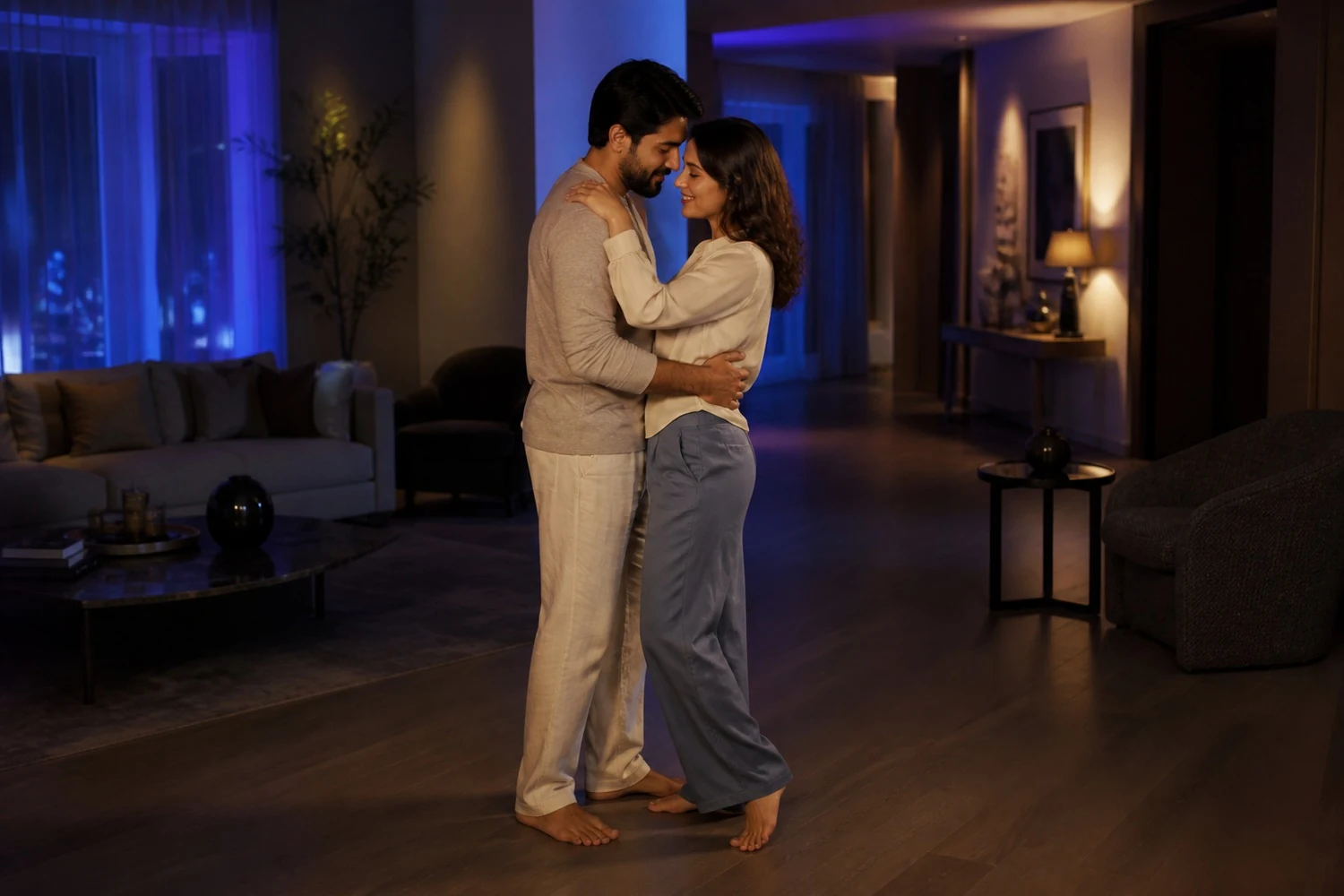
The song began without ceremony. Four piano notes, then the voice they had heard at a friend's wedding twelve years earlier. Maya looked up. Samir held out one hand with a theatrical seriousness that made her roll her eyes, but she took it.
They danced barefoot between the sofa and the dining table. There was no performance in it. He stepped on her foot. She corrected his rhythm. The lights moved almost imperceptibly from amber to violet, leaving their faces warm. Outside, the pool held a dark ribbon of blue.
Technology is frequently presented as spectacle: more buttons, brighter demonstrations, another reason to look at a screen. But the best moments in a home happen when the technology recedes. A song arrives. The harshness leaves the room. Two people remember that they are not only the managers of a shared life; they are still the people who chose it.

The promise of small evenings
Later they carried two cups of tea to the terrace. Samir reached for Maya's hand before he sat down. Across the water, garden lights glowed beneath the trees. Neither of them said the evening had changed anything. They did not need to turn tenderness into a project.
What they had found was smaller and more useful: a way back. Not a grand holiday or a carefully booked dinner. A familiar song, forgiving light and twenty unclaimed minutes beside the water.
AURA is built around that kind of intelligence. Lighting, music and routines matter because people do. The purpose is not to make a home feel automated. It is to make room for the feelings that busy days push to the edges. Sometimes a space feels right because, for a little while, the people inside it feel right with each other.
Aura Reflection
The technology in this story is intentionally quiet. The experience is the product: a space that protects attention, supports connection and feels naturally ready for the people inside it.