
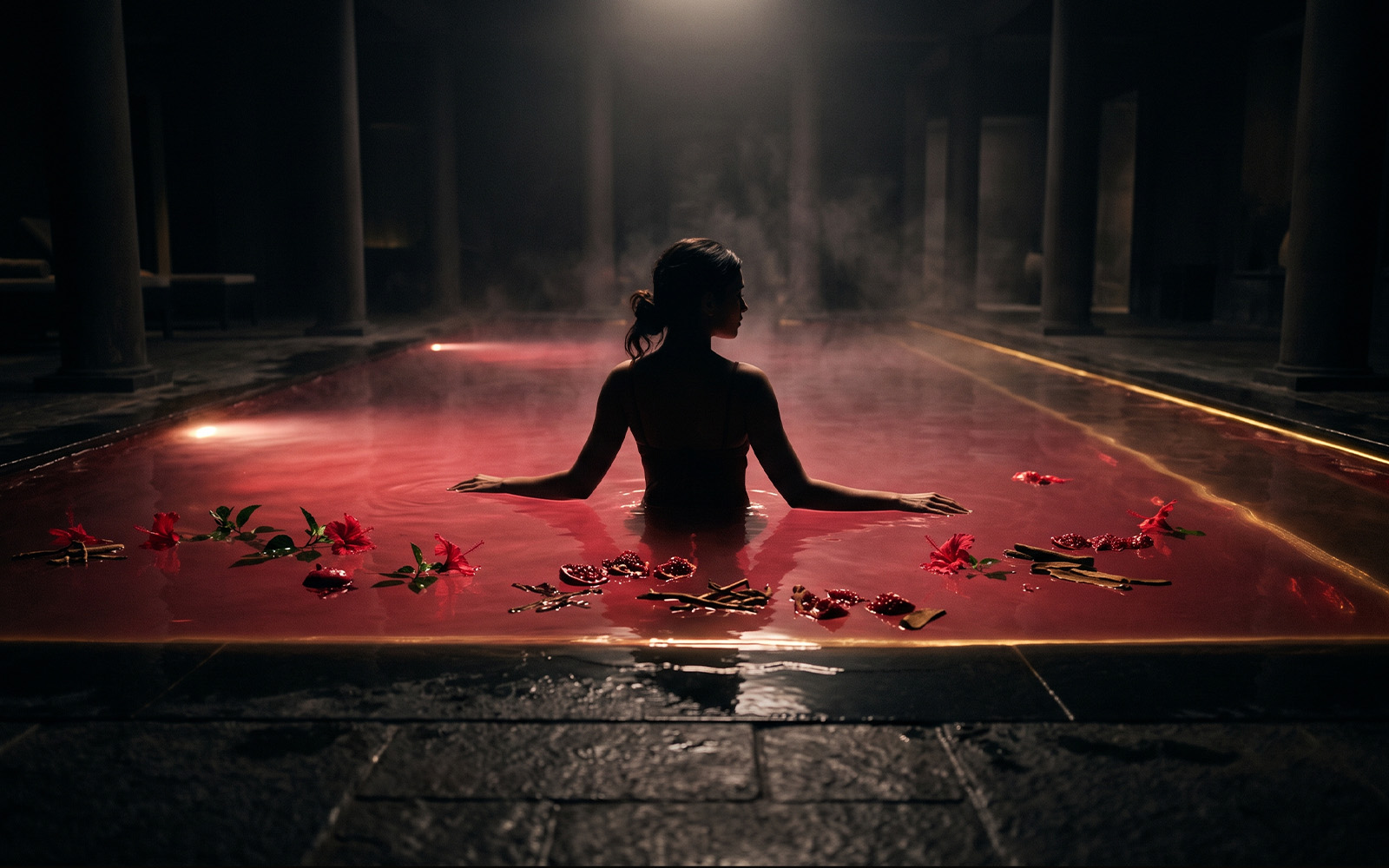
MAZACURE defines hot-climate pool care for extreme heat through water temperature, evaporation, treatment demand, shade, surfaces and swimmer comfort.
Hot-climate pool operation follows a dedicated seasonal routine. Higher water temperature, stronger sun, increased evaporation and changing bathing patterns can move several parts of the system at once.
Track the conditions that drive change
Record water temperature, water-level movement, make-up water, filter loading and the approved water-quality parameters for the installation. Review whether circulation schedules still match actual use and whether equipment spaces can reject heat safely.
Automatic top-up can hide water loss. Compare expected evaporation with unusual level changes so that leaks are not mistaken for summer.
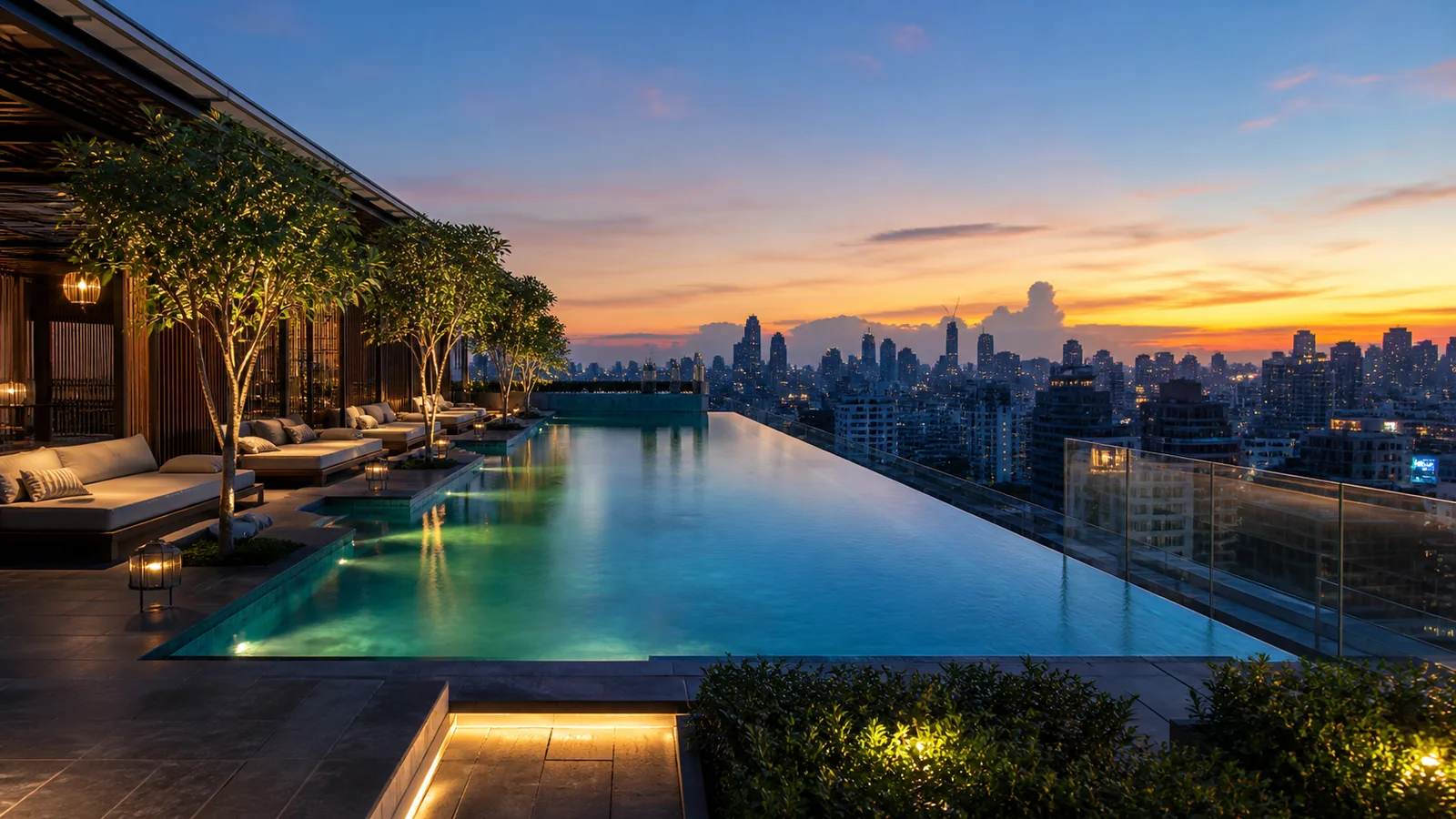
Design comfort beyond the water
- Shade the main rest and supervision areas.
- Check that decks, handrails and coping remain touch-safe.
- Provide a protected route from the building to the pool.
- Use evening lighting for the hours people are most likely to swim.
- Review plant irrigation and debris near the water.
Treat botanical concepts as temperature-sensitive
Heat can influence colour, aroma, formulation stability and treatment interaction. A summer concept must be tested at the real operating temperature and sun exposure. “Cooling” defines the sensory direction. Physiological language appears only with substantiation and approval.